B2B Wholesale Software: 2026 Comparison for Shopify Brands


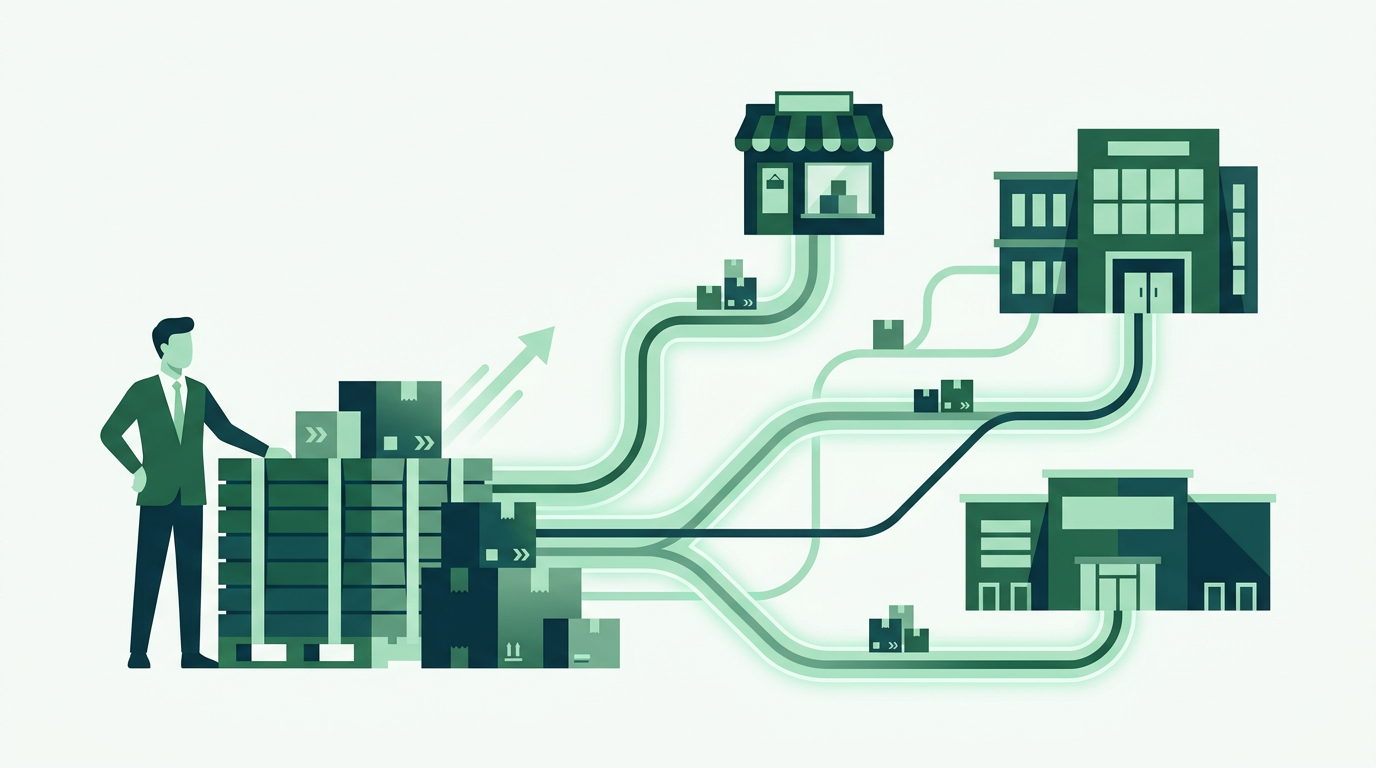
B2B wholesale software is the layer that lets you sell to trade buyers at trade terms: customer-specific price lists, volume discounts, minimum order quantities, gated catalogs and net terms, all applied automatically instead of by email and spreadsheet. For Shopify brands in 2026 there are four realistic options: Shopify's native B2B features, now available on every plan; a B2B app such as PortalSphere, SparkLayer, Wholesale Gorilla or BSS that layers wholesale rules onto your existing storefront; a standalone wholesale portal such as Orderspace that runs beside your store; or full distribution ERP. Most brands doing under a few hundred wholesale orders a month are best served by native B2B plus one app. Choose the app on what it gates behind higher tiers, not on the headline price.
Key takeaways
- Shopify's native B2B features now run on all plans, not just Plus, but standard plans are capped at three active pricing catalogs assigned at the market level.
- Entry pricing for Shopify B2B apps sits between $29 and $49 a month. The real difference is which tier unlocks net terms, volume discounts and gated catalogs.
- SparkLayer meters B2B orders per month (50 on Starter, 150 on Pro). PortalSphere, Wholesale Gorilla and BSS do not cap order volume.
- Standalone portals such as Orderspace start around $65 a month and give buyers a separate ordering site rather than your existing storefront.
- Choose on the two or three rules you actually need enforced, not on the longest feature list.
In this article
- What is B2B wholesale software?
- The four types of B2B wholesale software
- Which B2B wholesale software is best for Shopify brands?
- How much does B2B wholesale software cost?
- Features to insist on
- How to choose
- FAQ
What is B2B wholesale software?
B2B wholesale software is the system that applies trade rules to trade buyers automatically. Retail software assumes one price, one customer type and one checkout. Wholesale does not work that way. A stockist buys at 50 percent off, in cases of 12, with a $500 minimum, on net 30, tax exempt, and only after you have approved their account.
Wholesale management software encodes those rules so nobody has to remember them. The alternative is the version most brands start with: a price list PDF, an order emailed back as a spreadsheet, and someone keying it into the admin at 9pm. That works up to roughly thirty accounts, then it becomes the constraint on growth.
The pressure to fix it is not theoretical. In McKinsey's 2026 Global B2B Pulse, 73 percent of B2B buyers said they are comfortable placing orders above $50,000 online, up from 59 percent in 2022, and roughly a third of B2B revenue now moves through digital channels. Your buyers are not waiting for a rep to call back.
What are the four types of B2B wholesale software?
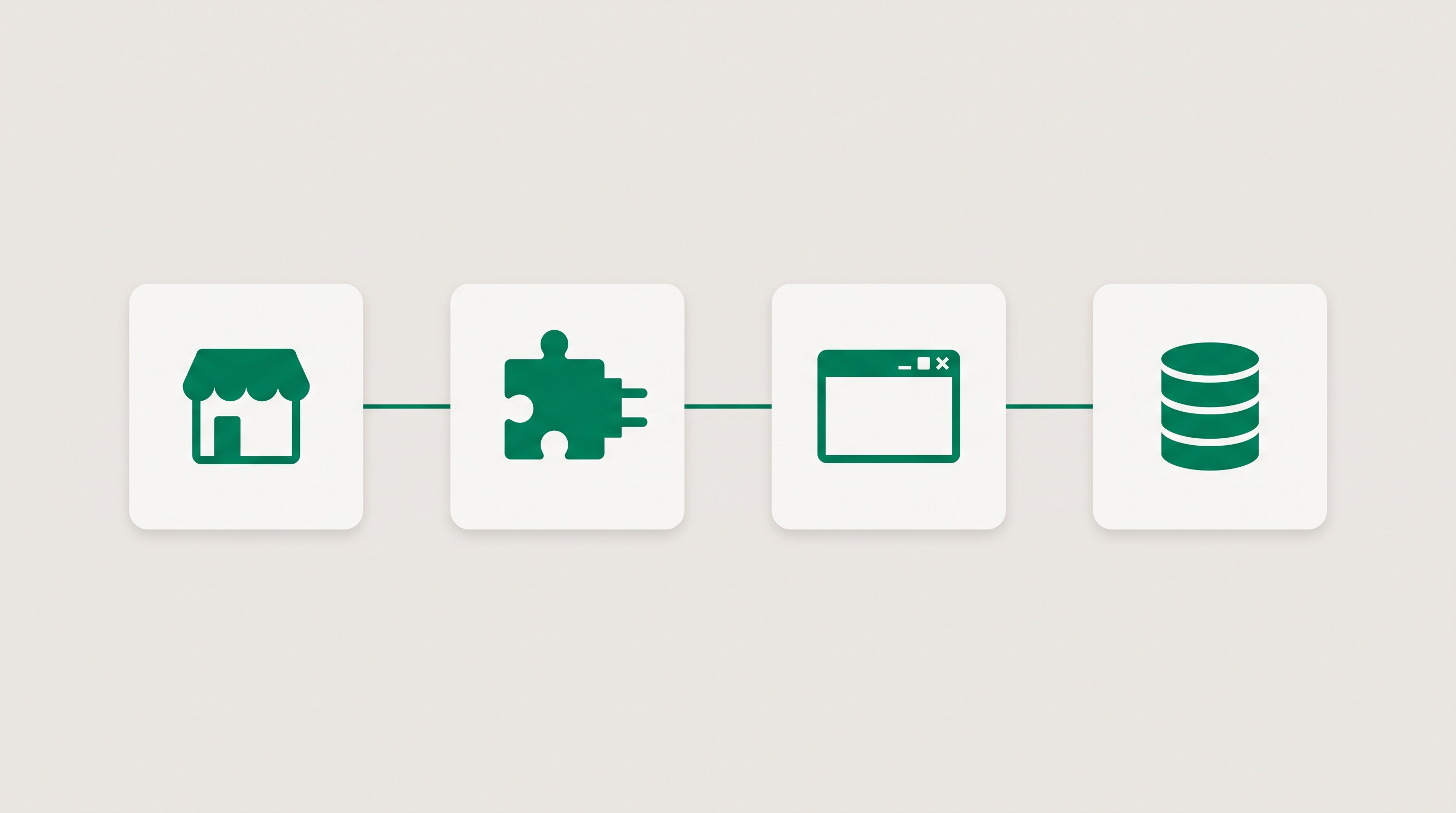
Almost every tool marketed as B2B wholesale software falls into one of four buckets. Knowing which bucket you are shopping in saves most of the confusion, because the categories are not really competing with each other.
- Native platform B2B features. Wholesale capability built into the ecommerce platform you already run. On Shopify this means company accounts, price catalogs, quantity rules and net terms. Free with your plan, but scoped to what the platform decides to support.
- B2B apps that extend your storefront. Tools such as PortalSphere, SparkLayer, Wholesale Gorilla and BSS that layer wholesale rules onto the store you already have. Buyers log into the same site your retail customers use and see different prices and rules.
- Standalone wholesale portals. Products such as Orderspace or B2B Wave that host a separate ordering site for trade buyers and sync products and orders back to your store. Useful if your wholesale range barely overlaps your retail range.
- Distribution ERP. NetSuite, inFlow and similar systems built around inventory, purchasing and accounting, with an ordering front end attached. This is the right answer when warehousing and procurement, not the storefront, are the hard part.
If you sell on Shopify and your wholesale catalog is mostly the same products as your retail catalog, options one and two are where you should be looking. Our guide to choosing a wholesale ecommerce platform goes deeper on the platform-level decision.
Which B2B wholesale software is best for Shopify brands in 2026?
For most Shopify brands the winner is native Shopify B2B plus one app that fills its gaps, and the app you pick should be decided by which rules you need enforced rather than by the headline price. PortalSphere leads on breadth per dollar and is the only option here with wholesale-specific upsells. SparkLayer is the strongest fit if you run field sales agents and can live with monthly order caps. Wholesale Gorilla and BSS are the cheapest way to get basic price rules live.
PortalSphere
PortalSphere runs tiered pricing, volume discounts, MOQs and pack sizing, gated registration with hidden prices, net terms and tax exemption from a single app, with no separate add-on required for the pieces most brands hit in month two. It is also the only tool in this table with wholesale-specific upsells and cross-sells, which matters because average order value is the lever that actually moves wholesale revenue. Plans run $49, $99, $199 and $399 a month, the trial is 14 days, and onboarding includes a specialist configuring everything on a draft version of your store before it goes live. Rated 4.8 out of 5 across 15 Shopify App Store reviews at the time of writing.
Shopify native B2B
The big change since 2025 is that Shopify's B2B feature set is no longer a Plus exclusive. Company accounts and locations, price catalogs, quantity rules, net terms and PO numbers, and the Trade theme are available from the Basic plan at $39 a month. The catch on standard plans is that you get three active pricing catalogs, assigned at the market level rather than per customer, and partial payments stay Plus-only. Three catalogs is enough for a simple good, better, best structure and not enough for account-specific pricing.
SparkLayer
SparkLayer is the most sales-team oriented option, with sales agent seats, a quoting engine and accounting integrations on the upper tiers. Its published pricing meters B2B orders per month: 5 on the free plan, 50 on Starter at $49, 100 on Growth at $149, and 150 on Pro at $299, with Enterprise from $499. If you process 200 wholesale orders a month, model that cost before you commit, because order caps rather than features are what push brands up its ladder.
Wholesale Gorilla and BSS
Both are inexpensive ways to get price rules live. Wholesale Gorilla runs $34.95, $69.95 and $149.95 a month with unlimited price rules and customer groups on every tier, though volume discounts and store locks sit on Premium. BSS B2B Wholesale Pricing starts free and runs $29, $49 and $99, with net terms, tax exemption validation and shipping rates arriving on the $49 Advanced tier, and price lists plus API access on Platinum. With both, check which tier holds the specific rule you need before comparing entry prices.
How much does B2B wholesale software cost?
For a Shopify brand, budget $30 to $200 a month. Entry tiers across the main B2B apps sit between $29 and $49, mid tiers between $69 and $149, and the top self-serve tiers between $99 and $399. Standalone portals start higher because they host a whole second site: Orderspace runs $65 to $185 a month depending on how many admin users and sales reps you need. Distribution ERP is a different order of magnitude and usually a different buying process.
The number that matters is not the entry price, it is the price of the tier that contains the rule you cannot launch without. Net terms is the usual example. It sits on the $49 tier at BSS, the $69.95 tier at Wholesale Gorilla, and is included from the entry tier at PortalSphere and SparkLayer. Price the tier, not the app. If net terms is your blocker, our walkthrough on offering net 30 to wholesale customers on Shopify covers the mechanics and the credit risk.
What features should B2B wholesale software have?
Ignore feature-count marketing. There are seven capabilities that decide whether the software actually removes manual work, and a tool that misses any of the ones you need will push that work back onto a human.
- Customer-group pricing. Different price lists for distributors, retailers and VIP accounts, assigned per customer rather than per market. See our guide to tiered wholesale pricing on Shopify.
- Volume discounts. Automatic price breaks at 12, 48 and 144 units so buyers self-serve their way up the ladder.
- MOQs and pack sizing. Order minimums by value or unit, plus case-pack increments so nobody orders 7 of a product that ships in 12s.
- Gated access. A registration form, an approval step, and prices hidden from the public. This is what stops retail shoppers seeing trade pricing.
- Net terms and tax exemption. Invoice payment at checkout for approved accounts, and resale certificate handling so you are not refunding sales tax by hand.
- Bulk ordering. A quick order form or CSV upload, because a buyer reordering 60 SKUs will not click through 60 product pages.
- B2B upsells. Relevant add-ons at the cart, the same lever that lifts retail AOV, applied to orders that are ten times larger.
How do you choose the right B2B wholesale software for your business?
Match the tool to your situation rather than to the longest feature list.
- Under 20 wholesale accounts, simple pricing. Start with native Shopify B2B. Three catalogs and quantity rules will hold, and it costs nothing extra.
- Account-specific pricing, gating, or net terms. You have outgrown three market-level catalogs. Add a B2B app. This is the largest group of brands by far.
- A field sales team writing orders on behalf of buyers. Prioritize sales agent seats and quoting, and check order caps against your real monthly volume.
- A wholesale range that barely overlaps retail. A standalone portal may be cleaner than bending one storefront around two audiences.
- Warehouse, purchasing and accounting are the bottleneck. The problem is not your storefront. Look at distribution ERP.
Whichever way you go, pilot it with three real accounts before you migrate everyone. Rules that look right in a settings panel behave differently once a buyer with a 40-line order hits them. If you want the setup mechanics end to end, see our gated B2B portal setup guide, and for a wider app-by-app view there is our roundup of the best Shopify wholesale apps in 2026.
Frequently asked questions
What is the difference between B2B wholesale software and a wholesale marketplace?
Wholesale software runs your own trade channel: your buyers, your pricing, your terms, on your domain. A marketplace such as Faire is a discovery channel that introduces you to new stockists and takes a commission on those orders. They are complements, not substitutes. Most brands use a marketplace to find accounts and their own software to keep the reorders, which carry no commission.
Do I need Shopify Plus to use B2B wholesale software?
No. Shopify's native B2B features became available on all plans in 2026, including Basic at $39 a month, and every B2B app compared here works on standard Shopify plans. Plus still unlocks unlimited pricing catalogs assigned at the customer level and partial payments, but you no longer need to be on Plus to sell wholesale properly.
Can B2B wholesale software handle MOQs and pack sizing?
Yes, and it is one of the main reasons to buy it. Good wholesale software enforces a minimum order value or quantity before checkout unlocks, and forces case-pack increments so a buyer can order 12 or 24 units but not 17. PortalSphere supports both MOQs and pack sizing on every plan; Shopify's native quantity rules cover minimums, maximums and case packs; check the specific tier on other apps, because some gate this behind an upgrade.
How long does it take to set up wholesale software?
A basic configuration of price groups, a registration form and MOQs takes a few hours. A realistic launch, including catalog decisions, shipping rules, tax exemption and testing with real buyers, takes one to two weeks. The slow part is almost never the software, it is deciding your pricing structure. PortalSphere includes free onboarding where a specialist builds the configuration on a draft version of your store first, which removes most of that time.
Can I run wholesale and retail from the same Shopify store?
Yes, and for most brands it is the right call, because you keep one inventory pool, one product catalog and one theme. Wholesale software applies trade pricing and rules only to logged-in, approved trade accounts while retail shoppers see the normal store. The pattern is covered in detail in our guide to running B2B and B2C from one Shopify store.
Run every wholesale rule from one Shopify app
Tiered pricing, MOQs and pack sizing, gated access, net terms and B2B upsells, with no order caps. 14-day free trial and free onboarding on a draft store.