Wholesale Club Shopify App: 2026 Comparison and 3 Alternatives

The Wholesale Club Shopify app still exists, but it is now called B2B Wholesale Hub, built by Orbit. It is the same app under a new name: custom pricing by customer group, volume discounts, order minimums, a quick order form, and net terms on higher plans, starting at $39 a month. It is a solid choice if you need wholesale pricing rules and little else. If your wholesale channel also needs pack sizing, tax exemption, and upsells built for B2B buyers, you will hit its edges, because those are not on its feature list at any tier. PortalSphere covers all three in one app from $49 a month, and Wholesale Pricing Discount B2B is the cheapest entry point at $24.99 a month. Choose on the rules your buyers actually hit, not the headline price.
Key takeaways
- Wholesale Club was renamed B2B Wholesale Hub by Orbit. It was not discontinued, and it holds 4.7 stars from roughly 698 Shopify App Store reviews.
- Its plans run $39, $69 and $99 a month. Net terms need the $69 plan and gating products behind a login needs the $99 plan, so a full setup is usually $99.
- Pack sizing and tax exemption are not on its feature list at any tier, which is the gap most wholesale brands feel first.
- Wholesale Pricing Discount B2B is the cheapest route at $24.99 a month and does include tax exemption. PortalSphere starts at $49 and covers pack sizing, terms, tax exemption and B2B upsells in one app.
- Test with a real buyer cart before you commit: a case-packed item, a quantity tier, a tax-exempt customer, and a checkout on terms.
In this article
- Is the Wholesale Club Shopify app still available?
- What the Wholesale Club Shopify app actually does
- Wholesale Club vs PortalSphere vs Wholesale Pricing Discount
- How wholesale pricing discount rules work in each app
- Do you still need an app now that Shopify has B2B?
- Which one should you choose?
- FAQ
Is the Wholesale Club Shopify app still available?
Yes, but not under that name. The app merchants know as Wholesale Club is now listed as B2B Wholesale Hub, built by Orbit. Same developer, same core app, new label. Orbit's own product page still refers to the former name, which is why the old term keeps showing up in support threads and app round-ups years after the change.
That matters for anyone searching for "wholesale club shopify app" today. You are not looking at a discontinued product, you are looking at a rebrand. It carries 4.7 stars from roughly 698 reviews on the Shopify App Store, which makes it one of the longest-running wholesale apps in the ecosystem.
The practical question is not whether it still exists. It is whether an app designed around wholesale pricing rules still covers what your wholesale channel needs in 2026, when buyers expect case quantities, terms, and a catalog that behaves like a real ordering portal.

What the Wholesale Club Shopify app actually does
Stripped of the branding, B2B Wholesale Hub is a customer-group pricing engine with a set of wholesale conveniences bolted around it. Orbit lists the following on its product page:
- Custom and percentage pricing applied by customer tag or group
- Volume discounts with quantity-based tiers
- Order minimums set by cart value, collection, product, or variant
- Quick order form so buyers can add many SKUs without clicking through the catalog
- Net terms (Net 15 and Net 30) on the Professional plan and above
- Product visibility locking on the Premium plan
- Registration form for approving new wholesale accounts
- Shopify POS and Markets compatibility
Pricing runs $39 a month for Basic, $69 for Professional, and $99 for Premium, with a 14-day free trial and 10 percent off annual billing. The tiering is the thing to watch: net terms sit behind the middle plan and gating products behind the top one, so the real cost of a full wholesale setup is usually $69 to $99 a month rather than the headline $39.
What the listing does not mention is equally useful to know. There is no reference to pack sizing or case quantities, no tax exemption handling, and nothing resembling B2B upsells. If your buyers order in cases of 12, or your resellers submit resale certificates, those gaps become manual work somewhere else in your process.
Wholesale Club vs PortalSphere vs Wholesale Pricing Discount
On price and track record, B2B Wholesale Hub and Wholesale Pricing Discount B2B win: both are cheaper to start and both carry hundreds more reviews. On breadth of wholesale rules in a single app, PortalSphere wins, because pack sizing, tax exemption, and B2B upsells are included rather than absent. Choose on which of those two criteria decides your setup.
B2B Wholesale Hub, the app formerly called Wholesale Club
Wholesale Hub is the safe, proven option for pricing rules. Custom pricing by customer group, quantity-tier volume discounts, and order minimums by cart value or collection all work natively, and 698 reviews at 4.7 stars is a lot of evidence that they keep working. The catch is plan tiering: net terms require the $69 Professional plan and locking products behind a login requires the $99 Premium plan, so a store that needs a genuinely gated catalog with terms pays $99 a month. Pack sizing and tax exemption are not part of the offer at any tier.
Wholesale Pricing Discount B2B, the cheapest way in
Wholesale Pricing Discount B2B, built by Wholesale Helper, starts at $24.99 a month and carries the highest rating of the three at 4.9 stars across roughly 723 reviews. It handles tiered pricing, volume discounts, MOQs by customer group, tax exemptions, and net terms of 15, 30, or 60 days on Professional and above, plus CSV import and export for bulk price changes. If your wholesale programme is mostly "same catalog, different prices, some paperwork", this is the lowest-cost route that still covers tax exemption. Pack sizing is the notable gap.
PortalSphere, when the channel is more than a price list
PortalSphere starts at $49 a month and puts the full rule set in one app: tiered pricing by customer group, volume discounts, MOQs and pack sizing, gated registration forms with hidden prices, net terms, tax exemption, B2B shipping rates, and AI-driven wholesale upsells, with B2B and B2C running from the same store. Being straight about the trade-off: with 18 reviews it has a far shorter public track record than the two incumbents, so if review volume is your primary risk filter, that is a real mark against it. What you get in exchange is not paying twice, once for a pricing app and again for whatever handles the rules it does not.
How wholesale pricing discount rules work in each app
All three apps solve the same starting problem: a wholesale customer should see a different price than a retail shopper, without you running a second store. They differ in how far the discount logic goes.
The baseline in every app is a group discount: tag a customer as wholesale, and they see a percentage off or a fixed custom price. Above that sits the quantity tier, where the price steps down at 12, 48, or 144 units. Both mechanisms are standard now, and if you want the setup mechanics rather than the comparison, our guide to volume discounts and quantity breaks on Shopify walks through it step by step.
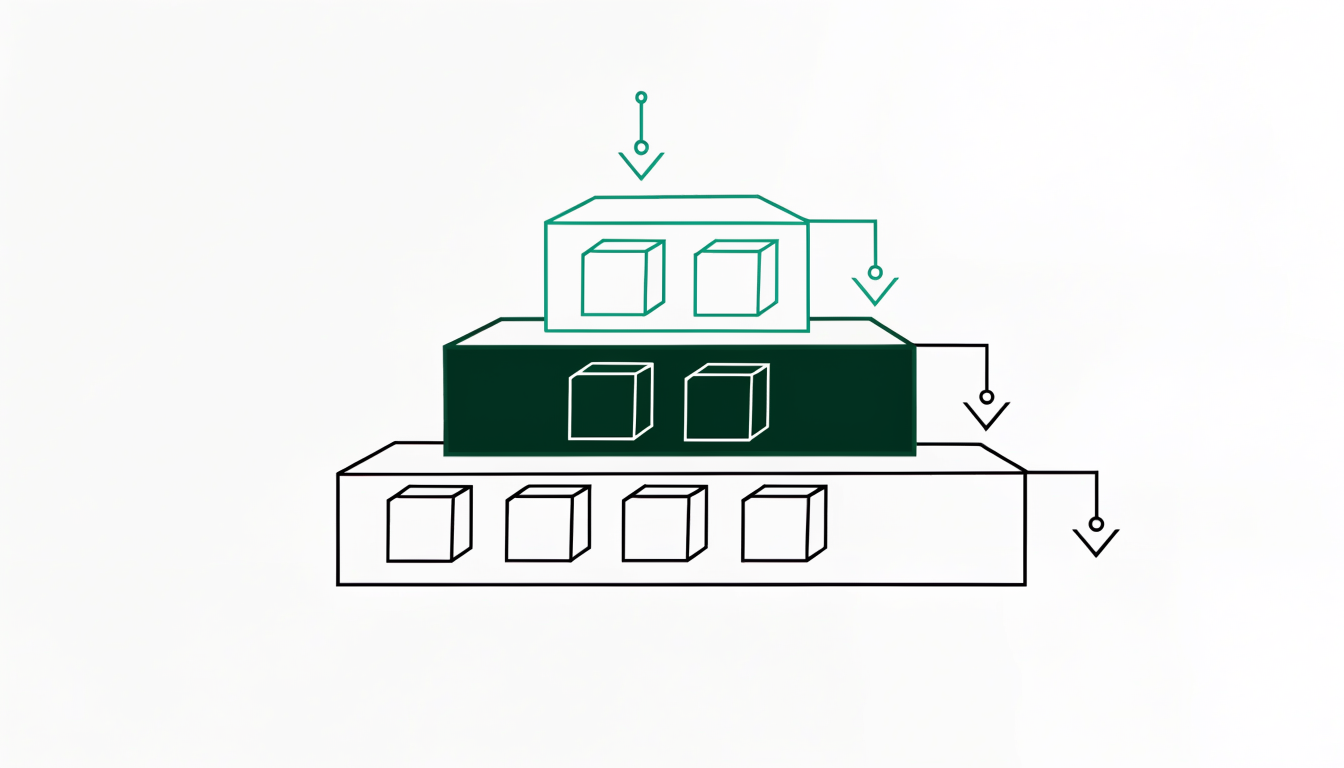
The third layer is where the three part company. A pack size rule says a product can only be bought in multiples of 6, and it is enforced in the cart rather than suggested in a product description. Wholesale Hub and Wholesale Pricing Discount both handle order minimums, which is a floor, but neither lists true multiple-of-pack enforcement. That distinction sounds small until a buyer orders 7 units of a case-packed item and someone in your warehouse has to call them.
Tax exemption follows the same pattern. Wholesale Pricing Discount includes it, PortalSphere includes it, and Wholesale Hub does not list it, which means resale certificate handling lives in a spreadsheet or in manual order edits. Our walkthrough on tax exemption for wholesale customers on Shopify covers what that setup involves either way.
Do you still need an app now that Shopify has B2B?
Shopify's native B2B is genuinely capable. Per Shopify's own documentation, B2B features are included on plans that support B2B capabilities and give you company profiles, custom catalogs, price lists, payment terms, and per-company shipping and currency settings, most of it switched on by default.
Two things send merchants to an app anyway. The first is the plan requirement: native B2B lives on the higher tiers, so a store on a standard plan is choosing between a large monthly jump and a $39 to $99 app. The second is that native B2B is built around the company-and-location model, which is right for distributors placing repeat orders and heavier than it needs to be for a brand with 40 stockists buying off a line sheet.
Apps also still lead on the small enforcement rules: pack multiples, per-group minimums, hidden prices before login, and upsells aimed at a buyer restocking rather than a consumer browsing. We put the two paths side by side in Shopify B2B vs a wholesale app if you are weighing the plan upgrade.
Which Shopify wholesale app should you choose?

- Choose B2B Wholesale Hub if you need dependable customer-group pricing and volume discounts, you are comfortable at $69 to $99 once net terms and product gating are in, and pack sizes and tax exemption are not part of how you sell.
- Choose Wholesale Pricing Discount B2B if budget leads, you want tax exemption included, and a highly reviewed app at $24.99 to $44.99 a month covers your rules.
- Choose PortalSphere if your buyers order in cases, you issue net terms and tax exemptions as a matter of course, and you would rather run one app than three. Free onboarding means a specialist configures it on a draft version of your store before it goes live.
- Choose native Shopify B2B if you are already on a plan that includes it and your buyers are companies with multiple locations placing repeat orders.
Whichever way you go, test with a real buyer's cart rather than a sample product. Add a case-packed item, apply a tier, mark the customer tax exempt, and try to check out on terms. Most app decisions get made on feature lists and then regretted at the cart. For a wider field than the three here, see our round-up of the best Shopify wholesale apps in 2026.
Frequently asked questions
What happened to the Wholesale Club Shopify app?
It was renamed. Orbit's Wholesale Club is now listed on the Shopify App Store as B2B Wholesale Hub. It is the same app and the same developer, and Orbit's own site still references the former name. Existing installs were not discontinued.
How much does the Wholesale Club Shopify app cost?
B2B Wholesale Hub costs $39 a month for Basic, $69 for Professional, and $99 for Premium, with a 14-day free trial and 10 percent off annual billing. Net terms start on the $69 plan and product visibility locking on the $99 plan, so a full gated wholesale setup lands at $99 a month.
Does Wholesale Club support net terms and tax exemption?
Net terms of Net 15 and Net 30 are available on the Professional plan and above. Tax exemption is not listed among its features, so resale certificate handling needs a separate solution or manual order edits. Wholesale Pricing Discount B2B and PortalSphere both include tax exemption.
Can I run wholesale and retail from one Shopify store?
Yes. All three apps here are built for exactly that: retail shoppers see published prices while tagged wholesale customers see group pricing, volume tiers, and their own catalog. You do not need a second store or a separate domain to keep the two audiences apart.
Does PortalSphere support MOQs and pack sizing?
Yes, both. PortalSphere enforces minimum order quantities and pack sizing or case quantities in the cart, so a case-packed item can only be bought in valid multiples. This is the clearest functional gap against B2B Wholesale Hub and Wholesale Pricing Discount B2B, neither of which lists pack multiple enforcement.
Which Shopify wholesale app has the best reviews?
By volume and score, Wholesale Pricing Discount B2B leads at 4.9 stars from roughly 723 reviews, with B2B Wholesale Hub at 4.7 from roughly 698. PortalSphere rates 4.8 but from only 18 reviews, so it has far less public history behind it. Review counts measure longevity, not fit, so weigh them alongside the rules you need.
Wholesale rules without the plan-tier puzzle
Tiered pricing, MOQs, pack sizing, net terms and tax exemption in one Shopify app, with free onboarding on a draft version of your store.