Wholesale vs Retail: What Is the Difference Between Wholesale and Retail?


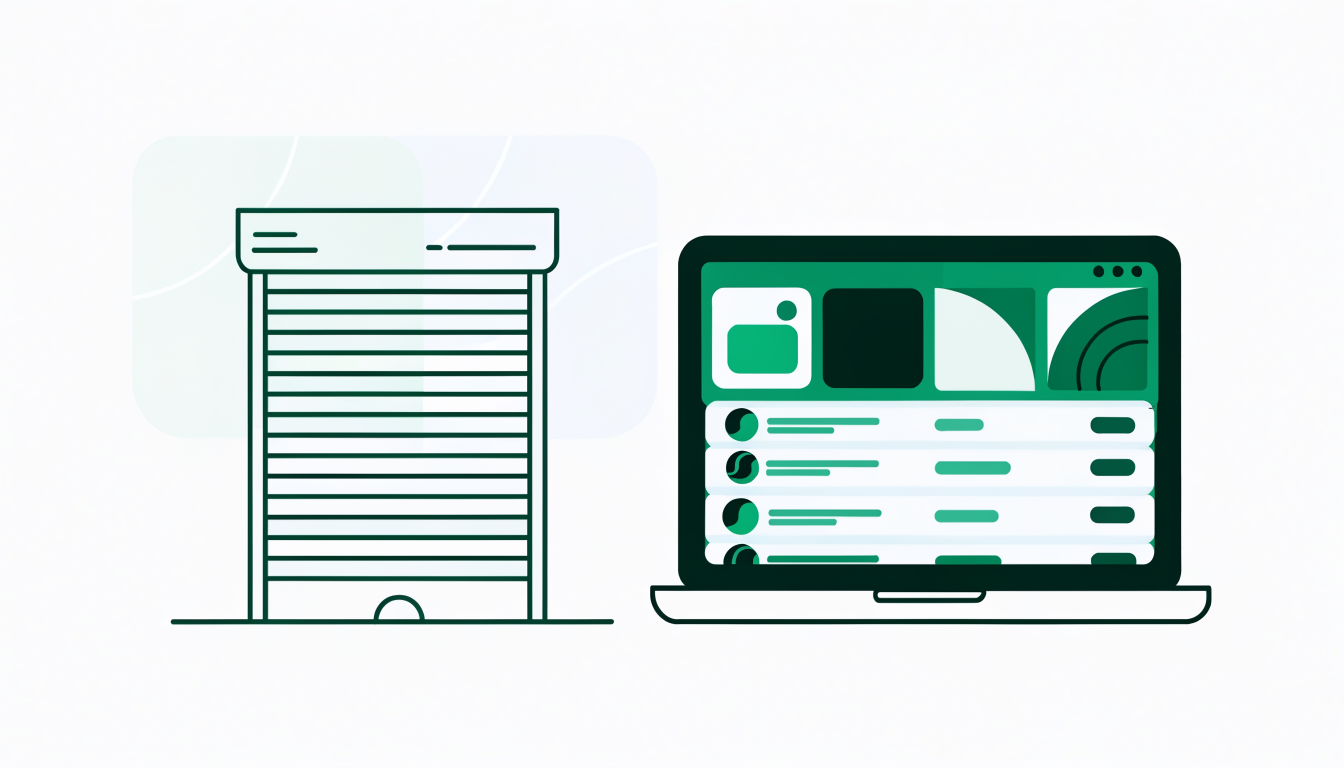
The difference between wholesale and retail is who buys, how much they buy, and what they pay. Wholesale means selling products in bulk to another business, a retailer, distributor or reseller, at a discounted per-unit price. Retail means selling individual units directly to the end consumer at full price. A wholesaler supplies the businesses that sell to the public; a retailer is the business that sells to the public. Wholesale prices typically run 30 to 50 percent below retail, so wholesale trades a smaller margin per unit for larger, more predictable, repeat orders, while retail keeps the full margin but wins one customer at a time. Many brands run both from a single Shopify store, showing wholesale pricing to approved buyers and retail pricing to everyone else.
Key takeaways
- Wholesale sells in bulk to businesses at discounted per-unit prices; retail sells single units to consumers at full price.
- Wholesaler and retailer describe the businesses, not the transaction: the wholesaler supplies the retailer, and US industry statistics count them as separate sectors.
- Retail vs wholesale pricing usually follows a 2x / 2x rule: wholesale at about twice cost, retail at about twice wholesale, a 30 to 50 percent gap.
- Retail wins on margin percentage; wholesale wins on profit per order and spreads acquisition cost across the whole shipment.
- You do not need two stores or Shopify Plus. One store can serve both using customer groups and gated pricing.
In this article
- What is the difference between wholesale and retail?
- What is the difference between a wholesaler and a retailer?
- Retail vs wholesale pricing: how do the numbers work?
- Wholesale vs retail: 7 key differences at a glance
- How do you buy wholesale and sell retail?
- Is selling wholesale worth it compared to retail?
- Can you sell both wholesale and retail from one Shopify store?
- Frequently asked questions
What is the difference between wholesale and retail?
The difference between wholesale and retail comes down to three things: who buys, how much they buy, and what they pay. In wholesale, you sell in bulk to another business, a retailer, distributor, or reseller, at a discounted per-unit price (a practice known as wholesaling). In retail, you sell individual units directly to the end consumer at full price. Change the buyer and the order size changes, and the price changes with it.
The meaning of wholesale
Wholesale is a business-to-business transaction. The buyer is purchasing stock, not a product for personal use, and they expect volume pricing, minimum order quantities, and often invoice payment terms rather than a card at checkout. The wholesale price has to leave the buyer enough room to resell at a profit.
The meaning of retail
Retail is a business-to-consumer transaction. The buyer is the person who will actually use the product. They buy one or a few units, pay the full list price (the MSRP), and pay immediately. You keep the entire markup, but you also carry the cost of finding that customer in the first place.
The simplest way to picture it: a candle maker who sells one candle for $24 on their website is doing retail. When a boutique buys 200 of those candles at $12 each to stock their shelves, that is wholesale. Same candle, two completely different transactions.
What is the difference between a wholesaler and a retailer?
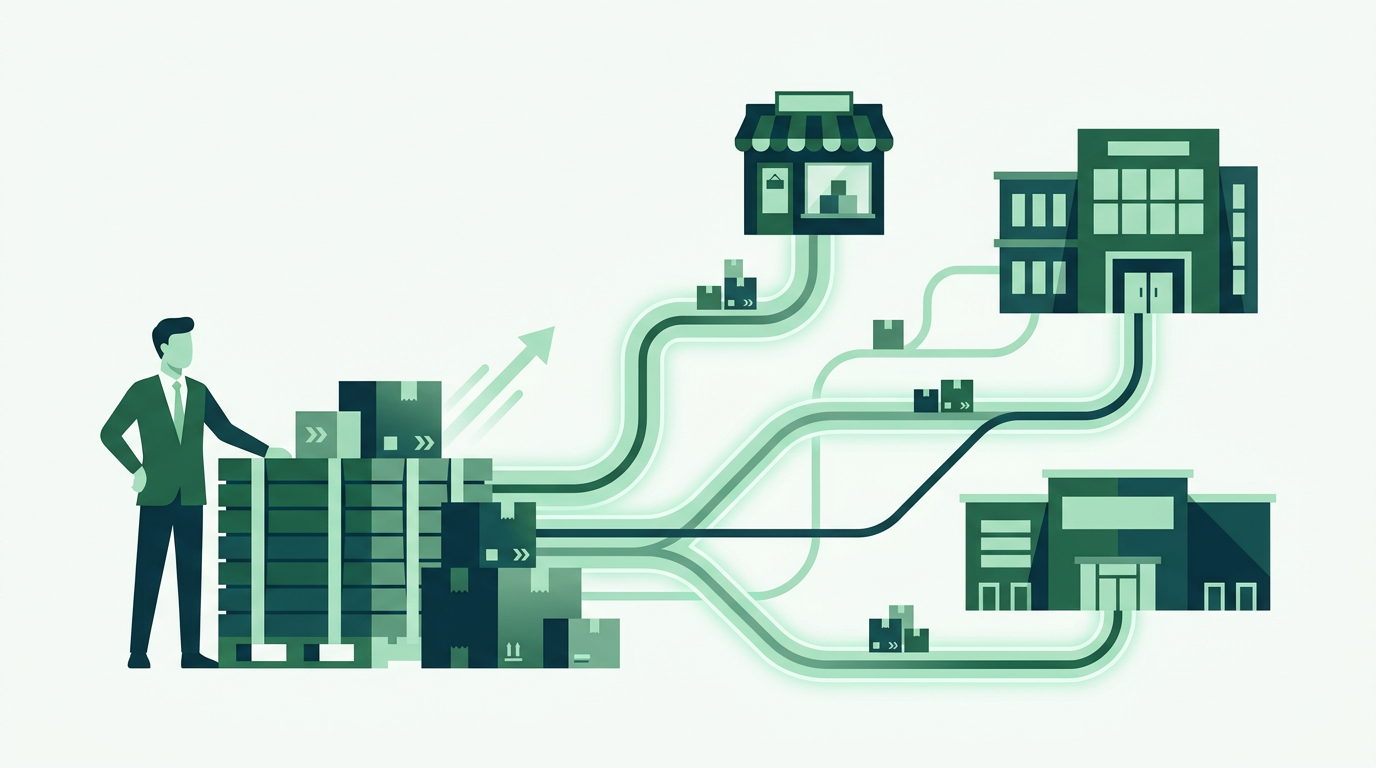
Wholesale and retail describe transactions. Wholesaler and retailer describe the businesses that carry them out, and they sit at different points in the same supply chain. A wholesaler buys or manufactures goods in quantity and sells them on to other businesses. A retailer buys those goods and sells them to the public, one unit at a time.
The distinction is formal enough that the United States government counts them as separate sectors of the economy. In the North American Industry Classification System, wholesale trade is sector 42 and retail trade is sectors 44 and 45. The Bureau of Labor Statistics defines wholesale trade as establishments "engaged in wholesaling merchandise, generally without transformation, and rendering services incidental to the sale of merchandise."

A few practical differences follow from that position in the chain. Wholesalers hold inventory in depth rather than in breadth, carrying large quantities of fewer lines. They sell to a small number of accounts that reorder on a schedule, so their sales effort is relationship work, not advertising. Retailers do the opposite: broad assortments, thin stock per line, and a large number of one-off buyers reached through marketing.
One business can be both. A brand that sells direct to shoppers on its own store and also supplies 40 stockists is acting as a retailer and a wholesaler at the same time, and that is now the normal setup for growing product brands rather than the exception. If you are building the supply side of that, our guide on how to become a wholesaler covers the requirements and paperwork, and how to get your product into retail stores covers the demand side.
Retail vs wholesale pricing: how do the numbers work?
The pricing gap is the heart of the difference. Wholesale prices are lower per unit because the buyer purchases in volume and then resells at their own markup. A widely used rule of thumb is the 2x / 2x formula: set your wholesale price at roughly twice your cost of goods, then set your retail price (the MSRP) at roughly twice the wholesale price. That second step is also known as keystone pricing.
Say a product costs you $6 to make. A wholesale price near $12 gives you a workable margin on bulk orders, and a retail price near $24 gives your stockists room to make their own margin while protecting your direct-to-consumer sales. Here is how wholesale vs retail pricing plays out on that same product.
Read that table and the trade-off is obvious. Retail wins decisively on margin percentage: 75 percent against 50 percent, and you keep every cent of it. Wholesale wins on absolute profit per transaction, turning $18 of gross profit into $1,200 from a single purchase order, and it spreads your acquisition cost across 200 units instead of paying it again on every sale. What wholesale costs you is cash-flow timing, because that $2,400 often arrives 30 to 60 days after the pallet ships. If you want to run this math on your own catalog, our guide on how to calculate wholesale price walks through the formula step by step.

Wholesale vs retail: 7 key differences at a glance
Wholesale wins on order size, predictability, and marketing cost per sale; retail wins on per-unit margin and control of the customer relationship. Here is how the two models compare across the differences that matter most.
Read that top to bottom and a pattern emerges. Wholesale is a volume and relationship game: you accept a lower margin on each unit in exchange for large, repeat orders and lower marketing costs, though you often wait 30 to 60 days for payment. Retail is a margin and reach game: you keep the full markup on every item, but you win each sale one customer at a time and carry the advertising cost that comes with it. Neither is "better," they simply suit different goals, and most growing brands eventually want both.
How do you buy wholesale and sell retail?
Buying wholesale and selling retail is the classic retailer model, and it takes four steps.
- Get your reseller paperwork in order. Most wholesalers will only open an account for a registered business, and in most US states you need a resale certificate or seller's permit so you can buy without paying sales tax on goods you intend to resell.
- Find suppliers and apply for accounts. Brands publish wholesale application forms, trade shows and online marketplaces list suppliers by category, and many manufacturers sell direct to stockists.
- Meet the minimums. Expect a minimum order quantity and sometimes a minimum opening order value. These are what make the discounted price worth the supplier's while.
- Set your retail price and protect it. Apply your markup, usually a keystone double, and check whether the supplier enforces a minimum advertised price before you discount.
If you would rather not hold stock at all, dropshipping versus wholesale compares the two approaches on margin, control, and shipping speed.
Is selling wholesale worth it compared to retail?
For most product brands, yes, wholesale is worth adding, as long as your margins can absorb the discount. Wholesale gives you three things retail struggles to: large predictable orders that smooth cash flow, buyers who reorder on a schedule, and distribution that puts your product in front of new audiences without you paying for every impression.
The trade-offs are real, though. Your per-unit margin shrinks, you may need to offer net terms and wait to get paid, and you take on new operational work: approving buyers, enforcing minimums, and managing tiered pricing. The brands that win treat wholesale as a deliberate channel with its own pricing and rules, not an afterthought bolted onto their retail store.
Can you sell both wholesale and retail from one Shopify store?
Yes. You do not need a separate site, a second Shopify plan, or a manual spreadsheet workflow to run both channels. The modern approach is a single storefront that recognizes who is shopping and shows the right prices to the right buyer. Retail customers see your normal catalog and MSRP; approved wholesale buyers log in and see their discounted, tiered pricing, minimum order quantities, and net terms.

This is exactly what PortalSphere is built for. It layers custom tiered pricing, volume discounts, MOQs and pack sizing, gated access with wholesale registration forms and hidden prices, plus net terms and tax exemption at checkout, all on top of your existing Shopify store. Your retail business keeps running untouched while your wholesale channel gets the pricing and controls it needs. For the full walkthrough, see our guide on running Shopify B2B and B2C from one store and how to set up tiered wholesale pricing.
Frequently asked questions
What is the difference between a wholesaler and a retailer?
A wholesaler sells goods in bulk to other businesses that intend to resell them, usually at a discounted per-unit price. A retailer buys those goods (or makes their own) and sells them individually to end consumers at full price. The wholesaler sits one step earlier in the supply chain, and US industry statistics treat the two as separate sectors.
How much is wholesale price vs retail price?
Wholesale prices are typically 30 to 50 percent below the retail price. A common formula sets the wholesale price at about twice your cost of goods and the retail price at about twice the wholesale price. On a product that costs $6 to make, that points to roughly $12 wholesale and $24 retail, a $12 difference per unit.
Can a business be both a wholesaler and a retailer?
Yes, and most growing product brands are. You sell direct to consumers at full price through your own store and supply stockists at a discount through a wholesale channel. The only requirement is that the two price lists stay separate, so retail shoppers never see wholesale pricing and approved buyers always do.
Is selling wholesale more profitable than retail?
Not per unit, retail keeps the full markup, so it earns more on each item sold. Wholesale earns less per unit but usually more per order and more predictably, because buyers purchase in bulk and reorder. Many brands make the most by running both channels so higher-margin retail and higher-volume wholesale balance each other.
Can I sell wholesale and retail from the same Shopify store?
Yes. Using customer groups and gated pricing, a single Shopify store can show retail prices to the public and discounted wholesale prices to approved, logged-in buyers. A tool like PortalSphere adds tiered pricing, MOQs, net terms, and registration controls so both channels run from one storefront without a separate site.
Do I need a Shopify Plus plan to sell wholesale?
No. You can run a full wholesale channel on standard Shopify plans by adding a wholesale app that handles B2B pricing, gated access, and bulk-order rules. See our guide on how to set up wholesale on Shopify without upgrading to Plus.
Run wholesale and retail from one Shopify store
PortalSphere adds B2B pricing, MOQs, and net terms to your existing store, with no second site and no spreadsheets. Start a 14-day free trial.