Best B2B Ecommerce Platforms in 2026: 8 Compared for Wholesale

The best B2B ecommerce platforms in 2026 are Shopify plus a wholesale app, Shopify native B2B, BigCommerce with B2B Edition, Adobe Commerce, OroCommerce, Salesforce B2B Commerce, commercetools, and WooCommerce with B2B plugins. For most brands the winner is Shopify plus a dedicated wholesale app, because tiered pricing, gated catalogs, MOQs, and net terms arrive in days on the store you already run, from a $29 per month plan. BigCommerce wholesale is the better pick when sales-rep quoting and an online invoice portal are central, though B2B Edition sits on an enterprise tier at custom pricing. The enterprise suites are worth their cost only when catalog complexity, ERP depth, or account hierarchy genuinely demands them. Choose a wholesale ecommerce platform on approach first, brand second.
Key takeaways
- The best B2B ecommerce platforms split into launch-now SaaS (Shopify, BigCommerce), enterprise suites (Adobe Commerce, OroCommerce, Salesforce, commercetools), and self-hosted builds (WooCommerce).
- For Shopify brands, Shopify plus a wholesale app is the fastest and cheapest route to tiered pricing, gated catalogs, MOQs, and net terms.
- BigCommerce wholesale means price lists and customer groups on standard plans, plus B2B Edition on the enterprise tier for accounts, quotes, and invoicing.
- BigCommerce wholesale pricing has two layers: a platform plan (Core $29 to Performance from about $1,499 per month) and a custom-quoted B2B Edition fee.
- Shopify put native B2B on every plan in 2026, with three B2B catalogs below Plus and unlimited catalogs on Plus.
- A wholesale ecommerce platform is worth choosing on approach, not brand: for most Shopify brands, an app beats replatforming.
In this article
- What are the best B2B ecommerce platforms in 2026?
- Is BigCommerce wholesale better than Shopify for B2B?
- How much does BigCommerce wholesale pricing cost?
- What is a wholesale ecommerce platform?
- What features should a wholesale ecommerce platform have?
- Which wholesale ecommerce platform should you choose?
- How do you set up wholesale ecommerce on Shopify?
- How much does a wholesale ecommerce platform cost?
- Should you move from BigCommerce to Shopify for wholesale?
- Frequently asked questions
What are the best B2B ecommerce platforms in 2026?
The best B2B ecommerce platforms in 2026 fall into three camps. There are SaaS platforms you can launch on this month (Shopify and BigCommerce), enterprise suites you implement over months (Adobe Commerce, OroCommerce, Salesforce B2B Commerce, commercetools), and self-hosted builds you assemble yourself (WooCommerce plus plugins). The right answer depends far more on which camp fits your team than on any feature checklist.
Our verdict: for brands selling wholesale through a Shopify store, the best B2B ecommerce platform is Shopify plus a dedicated wholesale app, because it delivers tiered pricing, gated catalogs, MOQs, and net terms without an enterprise contract or a migration. BigCommerce with B2B Edition wins when native quoting and online invoice payment are central to how your reps sell. The enterprise suites win when your catalog, ERP, or sales organisation genuinely demands them, and they are priced accordingly.
1. Shopify plus a wholesale app: best for most Shopify brands
This is where the majority of growing wholesale brands land, and it is the fastest route from a spreadsheet to a working buyer portal. PortalSphere adds tiered pricing and volume discounts per customer group, a gated catalog with a registration form and prices hidden until an account is approved, MOQs and pack or case sizing, bulk order entry, and net terms with tax exemption, all on the Shopify store you already run. B2B and B2C share one catalog, one inventory, and one checkout, so there is no second system and no migration. It is not an enterprise CPQ or an accounts-receivable portal, and it does not pretend to be.
2. Shopify native B2B: best zero-extra-cost starting point
Shopify's own B2B feature set is the cheapest credible way to start selling wholesale online. Companies, company locations, quantity rules, net payment terms, PO numbers, quick order lists, easy reorders, and sales-staff permissions all run from the entry plan up. The limits are real but manageable: three active B2B catalogs below Plus, no native quoting engine, and no invoice portal. If you have fewer than three pricing tiers and no gating requirement, start here and add an app when you hit a wall.
3. BigCommerce with B2B Edition: best native quoting and invoicing
BigCommerce B2B Edition has the most complete out-of-the-box wholesale workflow of any SaaS platform: corporate accounts with three buyer roles, purchase approval workflows, sales representatives who can masquerade as a customer to build a quote, and a self-service invoice portal where buyers pay by card, ACH, or purchase order and can settle several invoices in one batch. The catch is access, because B2B Edition sits on the top enterprise tier at custom pricing. Budget for a sales conversation, not a checkbox.
4. Adobe Commerce: best for large catalogs with developers on staff
Adobe Commerce (formerly Magento) ships a dedicated B2B module covering company accounts, shared catalogs for per-company pricing, negotiable quotes, requisition lists, purchase orders, quick order by SKU, company credit limits, and payment on account, as set out in Adobe's own B2B documentation. It is genuinely powerful and genuinely heavy: expect a licence quote, a development partner, and an implementation measured in months. Choose it when catalog complexity or deep customisation is the actual constraint, not when you simply want different prices for different buyers.
5. OroCommerce: best open-source platform built for distributors
OroCommerce is B2B-first rather than a retail platform with B2B bolted on, and it bundles CRM, CPQ, CMS, and invoicing under one licence with a low-code workflow engine for approval routing. It handles complex corporate account hierarchies with delegated purchasing across business units and branches, and it can run as single-tenant SaaS or on-premise. That makes it a strong fit for manufacturers and distributors with branch structures and long quote cycles, and overkill for a brand selling to 60 stockists.
6. Salesforce B2B Commerce: best if you already live in Salesforce
Salesforce B2B Commerce earns its place when your revenue team already runs on Salesforce CRM and you want the storefront, the account record, and the pipeline in one place. Entitlement-based catalogs, contract pricing, and reorder flows all tie back to the CRM object model. If you are not already a Salesforce shop, the licensing and implementation cost is difficult to justify on wholesale volume alone.
7. commercetools: best composable and API-first option
commercetools is a headless, API-first commerce backend rather than a storefront you configure. It suits organisations with an in-house engineering team that wants full control over the buyer experience and intends to compose pricing, catalog, and checkout services themselves. The flexibility is the point, and so is the cost: every piece of the B2B workflow that Shopify or BigCommerce hands you as a setting is something your team designs and builds.
8. WooCommerce plus B2B plugins: best low-cost self-hosted route
If your site already runs on WordPress, WooCommerce plus a wholesale plugin is the cheapest way to add trade pricing and a gated catalog. You pay for hosting and plugins rather than a platform subscription. The trade-off is that the B2B workflow is stitched together from several plugins that update independently, so maintenance, performance, and security land on you. Our WooCommerce B2B versus Shopify comparison covers that trade-off in detail.
Still defining requirements rather than shortlisting vendors? Start with our complete B2B ecommerce platform buyer's guide, then work through the seven criteria in how to choose a B2B ecommerce platform before you book a single demo.

Is BigCommerce wholesale better than Shopify for B2B?
BigCommerce wholesale is strongest at the enterprise end. Its core platform ships price lists and customer groups, and the heavier B2B machinery (company accounts with buyer roles, sales-rep quoting, an online invoice portal, purchase approval workflows) arrives through the separate B2B Edition app, which BigCommerce lists on its top enterprise tier and quotes to order. Shopify inverted that model in 2026: native B2B now sits on every plan, so companies, company locations, quantity rules, net payment terms, PO numbers, quick order lists, and sales-staff permissions are available from the entry plan up, with three active B2B catalogs on Basic, Grow, and Advanced and unlimited catalogs on Plus.
The short verdict: if you need built-in configure-price-quote and self-service invoice payment for a large field sales team, BigCommerce wholesale is a serious option and you should expect an enterprise contract. If you want a wholesale channel live in days on a plan you can afford today, Shopify plus a wholesale app wins on cost, setup time, and keeping B2B and B2C in one store.
BigCommerce plus B2B Edition
BigCommerce B2B Edition is the most complete out-of-the-box wholesale feature set of the three. It gives a corporate account three tiers of buyer (company administrator, senior buyer, junior buyer) with role-based permissions and purchase approval workflows, lets sales representatives masquerade as a customer and build a discounted quote for accounts they own, and adds saved shopping lists, a quick order pad, a company address book of pre-approved billing and shipping addresses, and order history rolled up by company. Its invoice portal is the standout: buyers view, track, and pay B2B invoices online by credit card, ACH, or purchase order, and can settle several invoices in one batch payment. The catch is access. B2B Edition is sold on the enterprise tier at custom pricing, so the entry point is a sales conversation rather than a checkbox, and a Shopify merchant would have to replatform to get there.
Shopify native B2B
Shopify's own B2B is now the cheapest credible starting point for a wholesale ecommerce platform. Per Shopify's own plan breakdown, companies, company locations, quantity rules, net payment terms, draft orders, easy reorders, PO numbers, sales-staff permissions, the Trade theme, quick order lists, and Shopify Flow automations run on Basic, Grow, Advanced, and Plus alike. Three limits matter. You get three active B2B catalogs below Plus, catalogs assigned directly to a single company or company location are Plus-only, and so are deposits, partial payments, payment requests per fulfillment, and contextual checkout through Shopify Markets. There is also no native quoting engine and no invoice portal, so quotes happen as draft orders and terms invoices get chased by email.
Shopify plus a wholesale app
This is where most brands land, because it fills Shopify's gaps without an enterprise contract. PortalSphere handles tiered pricing and volume discounts per customer group, gated access with a registration form and hidden prices until an account is approved, MOQs and pack or case sizing, bulk order entry, and net terms with tax exemption, all on the Shopify store you already run, with B2B and B2C sharing one catalog and one checkout. It does not try to replace an enterprise CPQ or an accounts-receivable portal. If quoting and invoice collection are the core of how your team sells, weigh BigCommerce B2B Edition honestly. If pricing rules, access control, and order rules are the core, the app route gets you there in days for a fraction of the cost. Our breakdown of Shopify native B2B versus a wholesale app covers that decision in more detail.

How much does BigCommerce wholesale pricing cost?
BigCommerce wholesale pricing has two layers, and the second one is the one that surprises people. The platform plans are public: Core at $29 per month billed annually, Growth at $79, Scale at $299, and Performance as a custom quote starting around $1,499 per month billed annually. Plans also move on you. BigCommerce upgrades accounts automatically against trailing-twelve-month GMV thresholds, the Scale plan carries a 0.9 percent overage on GMV above roughly $33,333 per month, and an account crossing $2 million in trailing-twelve-month GMV is moved to the Performance tier.
The second layer is B2B Edition itself. Because it is listed on the enterprise tier at custom pricing, the realistic budget for the full BigCommerce wholesale feature set is the Performance-tier platform fee plus a negotiated B2B Edition fee, before any implementation work. That is a different order of magnitude from the Shopify route, where the same class of buyer experience starts at a $29 per month plan plus a wholesale app, and Shopify Plus (from about $2,300 per month) only becomes necessary if you need unlimited catalogs, direct company catalogs, or deposits and partial payments.
Put plainly: on BigCommerce you buy wholesale capability by moving up a tier, and on Shopify you buy it by adding an app. If your wholesale channel is currently a spreadsheet and a shared inbox, the second path is almost always the cheaper experiment.
What is a wholesale ecommerce platform?
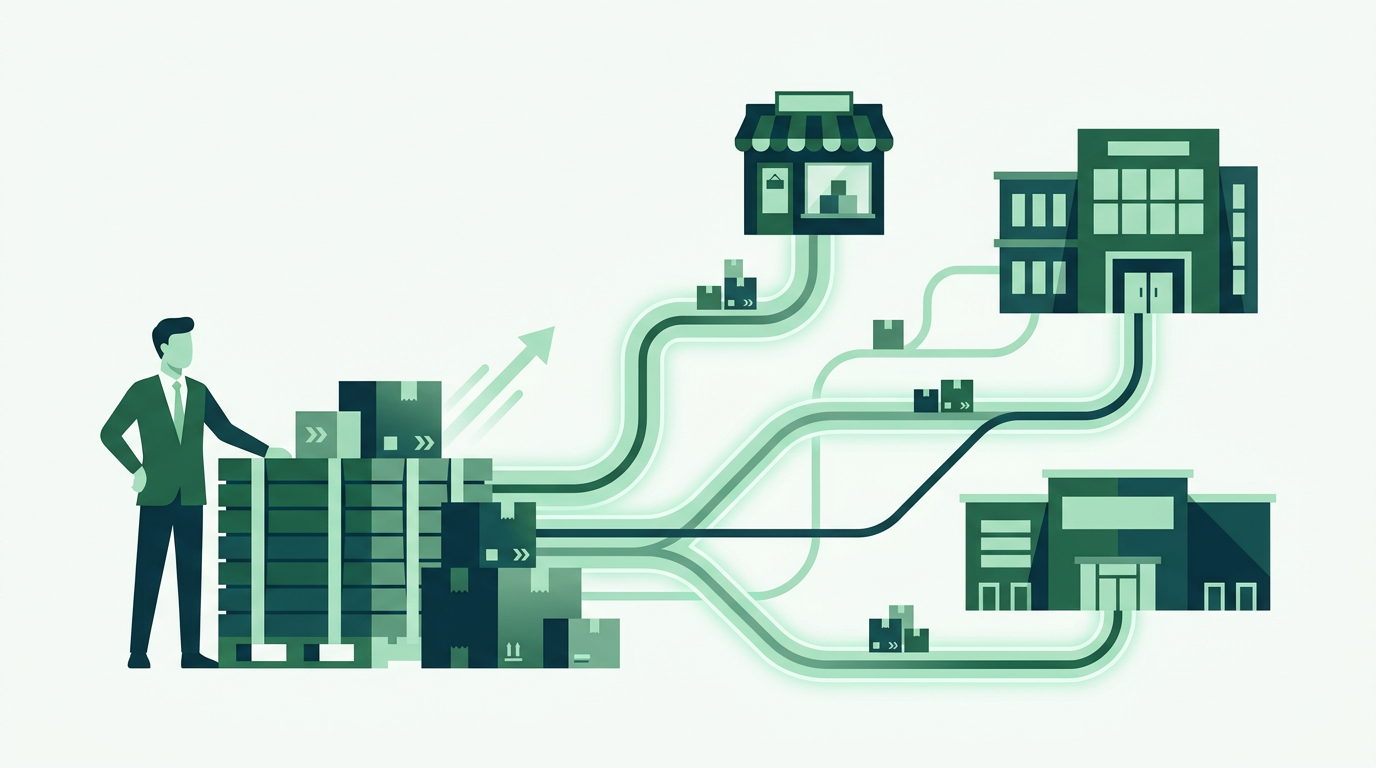
A wholesale ecommerce platform is the software you use to sell to other businesses online, rather than to individual shoppers. It handles the things a normal retail storefront cannot: customer-specific and tiered pricing, minimum order quantities, gated catalogs that hide prices until a buyer is approved, bulk order entry, and payment on net terms.
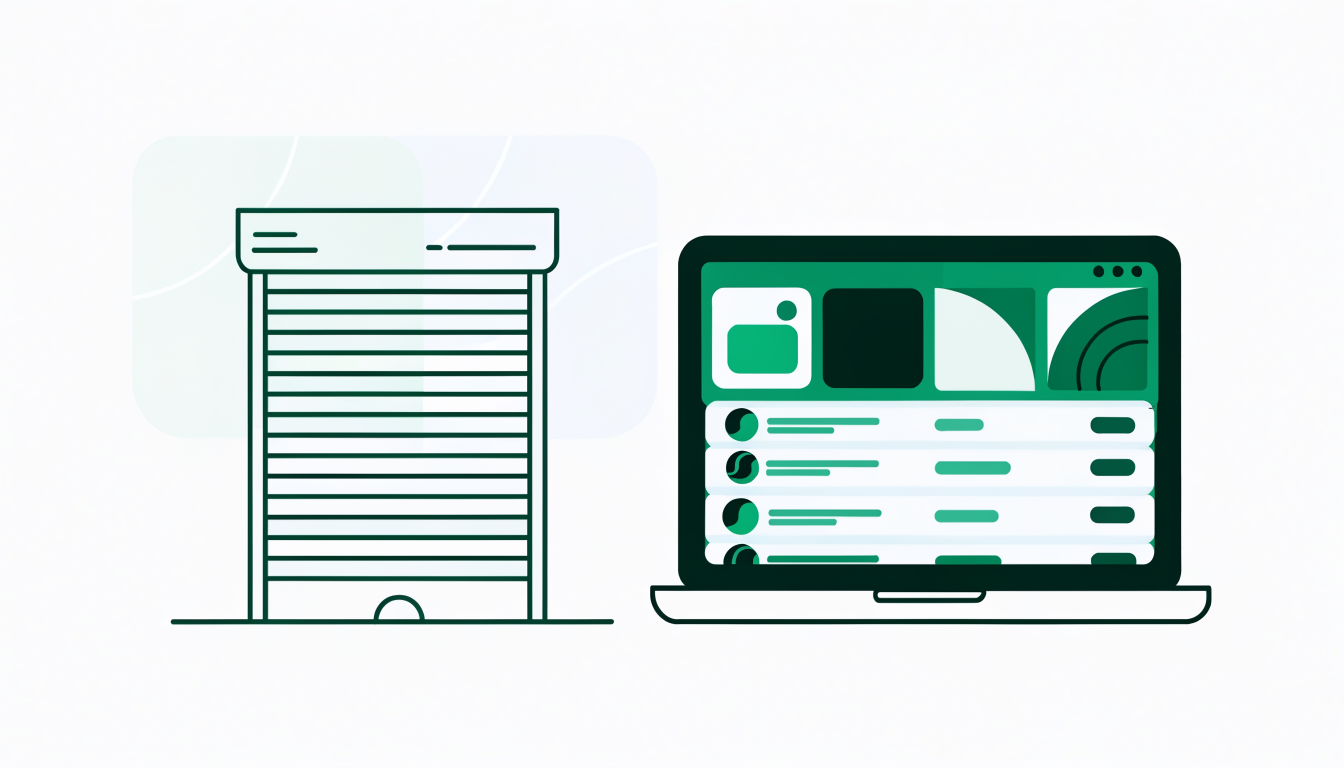
The old way of running wholesale was manual: a PDF line sheet, prices quoted over email, and orders keyed into a spreadsheet by hand. That approach breaks the moment you add a second pricing tier or a tenth stockist. A wholesale ecommerce platform turns that manual effort into a self-service buying experience your retailers can use around the clock, which is where most of the time savings and fewer order errors come from.
What features should a wholesale ecommerce platform have?
Not every tool that calls itself a wholesale platform covers the full workflow. These are the capabilities that actually matter when you are selling B2B, and the ones to check before you commit.
- Customer-specific and tiered pricing. Different buyers pay different prices. You need volume discounts and per-group pricing without maintaining a separate catalog for each account.
- Gated access and hidden prices. Wholesale pricing should only appear to approved, logged-in buyers, with a registration form and an approval step before anyone sees trade rates.
- Minimum order quantities and pack sizing. Enforce MOQs and case or pack multiples at the product level so no one can order below your terms.
- Bulk ordering. Buyers reordering 60 SKUs should not add them one product page at a time. A quick bulk order form is essential.
- Net terms and tax exemption. B2B buyers expect to pay on net 30 and to check out tax exempt where they qualify.
- B2B and B2C in one place. If you also sell direct to consumers, running both from a single store avoids duplicate inventory and a second system to maintain.
Which wholesale ecommerce platform should you choose?
For most brands the choice is not really a specific product, it is an approach. If you already sell on Shopify, adding a dedicated wholesale app to your existing store usually beats migrating to a separate B2B system on cost, speed, and the buyer experience. A standalone platform can make sense for large distributors with deep ERP requirements, but it means a second system to run.
Shopify plus a wholesale app. This is the fastest route for brands already on Shopify. You keep your existing store, theme, and checkout, and layer B2B features on top. PortalSphere handles tiered pricing, gated access, MOQs and pack sizing, and net terms natively, so you set volume discounts per customer group and run B2B and B2C from one store without a second app or a migration.
A standalone B2B platform. Dedicated systems are built for wholesale from the ground up and can be the right call for large distributors with complex ERP, logistics, or multi-warehouse needs. The trade-off is a separate storefront, a migration project measured in weeks or months, and a second platform to maintain alongside any DTC store you already run.
Manual and spreadsheets. This costs nothing to start but does not scale. There is no self-service ordering, pricing lives in your head or a fragile spreadsheet, and every order is retyped by hand, which is where errors and slow turnaround come from.
How do you set up wholesale ecommerce on Shopify?
If you are on Shopify, you can stand up a working wholesale channel in a few steps rather than rebuilding your store. Here is the short version.
- Install a wholesale app and gate access. Add a registration form for new buyers and hide trade prices until an account is approved.
- Set your pricing. Create customer groups and apply tiered or volume pricing to each, so approved buyers see their rates automatically.
- Add order rules. Set MOQs and pack sizes on the products that need them, and turn on a bulk order form for fast reordering.
- Enable net terms and tax exemption. Offer net 30 at checkout and flag tax-exempt buyers so their orders are handled correctly.
- Test with one buyer, then invite the rest. Place a full test order as an approved account before you roll it out to your stockists.
For a deeper walkthrough, see our guides on setting up wholesale on Shopify and running B2B and B2C in one store. PortalSphere also includes free onboarding, where a specialist sets everything up on a draft of your store before it goes live.

How much does a wholesale ecommerce platform cost?
Cost depends far more on the approach than on any single product. A wholesale app on top of Shopify is typically a monthly subscription in the low hundreds of dollars or less, on top of your existing Shopify plan, and you are live in days. A standalone B2B platform usually carries higher monthly fees plus an implementation project, so the real cost includes weeks of setup and a second system to run. Spreadsheets look free but carry a hidden cost in staff time and order errors as you grow. For a feature-by-feature look at the app route, see our roundup of the best Shopify wholesale apps for 2026.
B2B ecommerce continues to shift online, and buyers increasingly expect the same self-service experience they get as consumers. Shopify's own overview of B2B ecommerce is a useful primer on where the channel is heading.
Should you move from BigCommerce to Shopify for wholesale?
Only if the reason is bigger than wholesale. Replatforming costs weeks of work, risks URLs and organic traffic, and retrains your buyers, so it is rarely worth it purely to change which system holds your price lists. Two cases do justify it. The first is a brand already running DTC on Shopify that is being quoted an enterprise BigCommerce contract just to unlock wholesale, where staying put and adding an app is the obvious answer. The second is a BigCommerce merchant whose real problem is running two storefronts, because consolidating B2B and B2C into one Shopify store removes a whole system, one inventory sync, and one theme to maintain.
If you are staying on BigCommerce, the honest advice is to use price lists and customer groups properly before paying for B2B Edition, and to only buy the enterprise tier once quoting or invoice collection is genuinely the bottleneck. If you are moving, follow a checklist rather than improvising: our guide to B2B ecommerce replatforming covers catalog mapping, customer group migration, and the redirect work that protects your rankings.
Frequently asked questions
What is the best B2B ecommerce platform?
There is no single best B2B ecommerce platform for every business, but there is a clear best answer per situation. For brands already selling on Shopify, Shopify plus a wholesale app such as PortalSphere is the best B2B ecommerce platform because it adds tiered pricing, gated catalogs, MOQs, and net terms in days without a migration. For sales teams that quote and collect invoices online, BigCommerce with B2B Edition is the strongest SaaS option. For large distributors with complex account hierarchies, OroCommerce or Adobe Commerce are the usual shortlist.
What are the best B2B ecommerce platforms for small businesses?
Small businesses are best served by SaaS platforms with a low entry price and no implementation project. Shopify native B2B starts at a $29 per month plan and covers companies, quantity rules, net payment terms, and PO numbers, and adding a wholesale app covers gated pricing, MOQs, and bulk ordering for a modest monthly fee. WooCommerce plus B2B plugins is cheaper still if you already run WordPress, at the cost of maintaining the stack yourself. Enterprise suites such as Adobe Commerce, Salesforce B2B Commerce, and commercetools are almost never the right call at this size.
Which B2B ecommerce platform is best for wholesale distributors?
Distributors with branch structures, delegated purchasing, and long quote cycles are the one group that regularly justifies an enterprise platform. OroCommerce is purpose-built for that profile, with corporate account hierarchies, a low-code approval workflow engine, and CRM and CPQ under the same licence. BigCommerce B2B Edition is the lighter alternative when quoting and invoice payment matter more than account hierarchy. Distributors selling a manageable catalog to independent retailers usually do better on Shopify with a wholesale app than on either.
What is the difference between ecommerce and wholesale?
Ecommerce is selling online. Wholesale is selling to other businesses, usually in bulk and at trade prices, rather than to individual consumers. Wholesale ecommerce combines the two: selling B2B online with features like tiered pricing, MOQs, and net terms that a standard retail store does not have.
What wholesale ecommerce platform supports complex pricing rules?
Look for a platform with customer-specific and tiered pricing by group, plus volume discounts and quantity breaks. PortalSphere supports all of these natively on Shopify, so you can set different rates per customer group without maintaining a separate catalog for each account.
Can wholesalers require account approval before showing prices?
Yes. A gated catalog hides products or prices until a buyer registers and is approved. This keeps trade pricing away from the public and away from your retail customers, and it is a standard feature of a proper wholesale ecommerce platform.
What are the must-have features for a wholesale ecommerce platform?
The essentials are customer-specific and tiered pricing, gated access with hidden prices, minimum order quantities and pack sizing, a bulk order form, and net terms with tax exemption. If you also sell direct to consumers, the ability to run B2B and B2C from one store is a major plus.
Do I need to leave Shopify to sell wholesale?
No. Most Shopify merchants add a dedicated wholesale app rather than migrating to a separate B2B system. That keeps your existing store, theme, and checkout while adding the B2B pricing, access control, and terms you need.
Does BigCommerce support wholesale out of the box?
Partly. BigCommerce includes price lists and customer groups on its standard plans, which is enough to show different prices to different trade accounts and to hide prices from guests. The full wholesale workflow (corporate accounts with buyer roles, sales-rep quoting, purchase approval, and an online invoice portal) comes from the separate B2B Edition app, which BigCommerce lists on its top enterprise tier at custom pricing.
Is BigCommerce or Shopify cheaper for wholesale?
Shopify, in almost every scenario below enterprise scale. Shopify's native B2B features are included on every plan from $29 per month, and adding a wholesale app for gated pricing, MOQs, and bulk ordering keeps you in the low hundreds of dollars per month. Matching that on BigCommerce means the enterprise Performance tier, which starts around $1,499 per month billed annually, plus a custom-quoted B2B Edition fee.
What does BigCommerce B2B Edition do that Shopify does not?
Two things stand out. It has a native quoting engine, so a sales rep can masquerade as a customer and build a discounted quote inside the platform, and it has a self-service invoice portal where buyers view, track, and pay invoices by card, ACH, or purchase order, including batch payments across several invoices. On Shopify those jobs are handled with draft orders and an external accounts-receivable process.
Can I run wholesale on Shopify without Shopify Plus?
Yes. Native B2B features including companies, quantity rules, net terms, PO numbers, and quick order lists work on Basic, Grow, and Advanced, with a limit of three active B2B catalogs. Plus is only required for unlimited catalogs, catalogs assigned directly to a company, deposits, partial payments, and contextual checkout. A wholesale app covers the rest, which is why most brands launch wholesale without upgrading to Plus.
The best B2B ecommerce platform is usually the one you already have
PortalSphere adds tiered pricing, gated access, MOQs, and net terms to the Shopify store you already run. 14-day free trial with free onboarding.