B2B Ecommerce for Distributors: Setup, Pricing and Rules

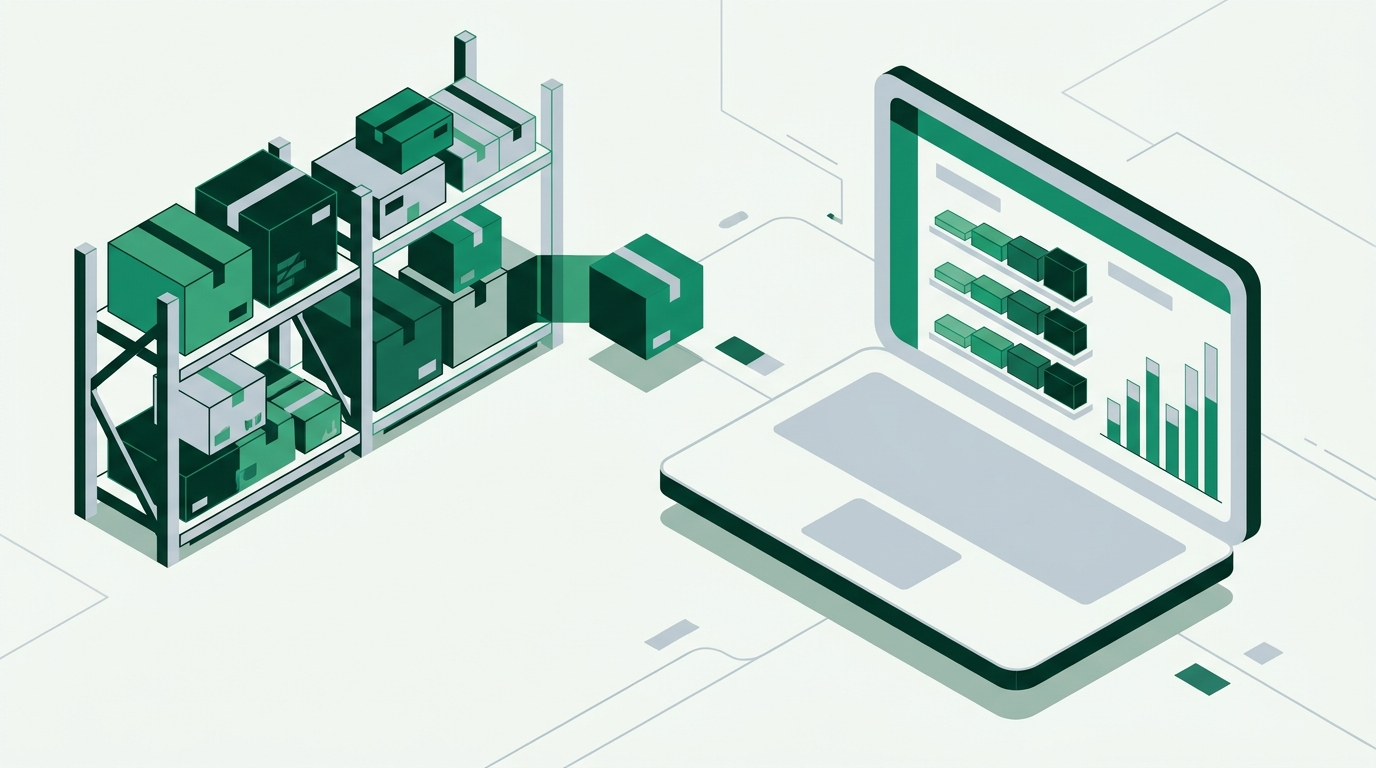
B2B ecommerce for distributors is a self-service online store where approved trade buyers log in, see their own negotiated pricing, and place bulk orders without calling a rep. Setting one up on Shopify comes down to five things: gate the catalog so only approved accounts see wholesale prices, define three to five pricing tiers before you build, enforce order rules (minimum order quantities, case-pack sizing and quantity breaks) at checkout rather than in your terms, offer net 30 terms and automatic tax exemption so buyers do not have to pay by card, and connect the store to your ERP or accounting system so orders and inventory stay in sync. On an existing Shopify store that is realistically a one to two week project, and software runs $49 to $399 per month for a wholesale layer versus five or six figures a year for an enterprise B2B platform.
Key takeaways
- Distributor ecommerce is defined by three things: buyer-specific pricing, enforced order rules, and payment on terms. Everything else is plumbing.
- Gate the catalog first. It sets your architecture, and leaked wholesale pricing is harder to fix than any technical problem on the list.
- MOQs and pack sizes only work as checkout rules. A policy someone has to remember is a policy that gets waived.
- 34% of B2B revenue now runs through self-service digital and remote online channels, according to McKinsey's B2B Pulse survey.
- Budget $49 to $399 per month for a wholesale layer on Shopify, versus five or six figures a year for an enterprise B2B platform.
In this article
- What is B2B ecommerce for distributors?
- Why distributors are moving ordering online now
- What a distributor ecommerce setup actually needs
- Step 1: Gate the catalog
- Step 2: Build your price tiers first
- Step 3: Set MOQs, pack sizes and quantity breaks
- Step 4: Offer the payment terms buyers expect
- Step 5: Connect the store to your back office
- What distributor ecommerce software costs
- Frequently asked questions
What is B2B ecommerce for distributors?
B2B ecommerce for distributors is a self-service online store where approved trade buyers log in, see their own negotiated pricing, and place bulk orders without calling a rep. It differs from a retail store in three ways: prices are buyer-specific rather than public, orders are governed by rules (minimums, case packs, credit limits), and payment usually happens on terms rather than card-on-checkout.
That is the whole job. Everything else in an ecommerce for distributors project is plumbing in service of those three things. Most distributor ecommerce failures come from treating the store as a catalog website: a catalog tells a buyer what you sell, whereas a portal lets them buy it correctly, at their price, under their terms, at 11pm on a Sunday when your inside sales team is offline.
Why distributors are moving ordering online now
The buyer changed before the software did. In McKinsey's ninth annual B2B Pulse survey of 3,942 B2B decision makers, self-service digital commerce and remote online ordering together accounted for 34% of revenue, while in-person sales fell to 17% from 22% two years earlier. Comfort with large online orders climbed at the same time: 73% of buyers said they would place an order over $50,000 through a digital or remote channel, up from 59%, and 20% said the same about orders over $1 million.
Read that as a distribution problem rather than a marketing one. Your buyers are purchasing agents reordering the same 40 SKUs every month, and every reorder that arrives as an email or a phone call costs you an hour of someone's day plus a chance to key in the wrong quantity. There is a defensive angle too: if a buyer can reorder from a competitor in ninety seconds and from you only during business hours, the ninety-second option wins the routine volume, and routine volume is where distribution margin lives.
What does a distributor ecommerce setup actually need?
Judged on the things that break a distribution business, a purpose-built B2B layer on Shopify beats the email-and-spreadsheet process on every requirement that involves a rule being enforced rather than remembered. Here is the honest comparison.
The rows that decide the project are the enforcement rows. With email ordering, a minimum order quantity is a policy someone has to remember and then awkwardly correct after the fact, which means it gets waived. With a B2B layer on Shopify the MOQ is a checkout rule, so the order cannot be submitted below it and nobody has to have that conversation. Pack sizing works the same way: a case of 12 ordered as 7 units is a picking error waiting to happen, and the only reliable fix is a system that refuses the 7.
Pricing follows the same principle. Tiered pricing by customer group means a buyer logs in and sees their tier, not a public price with a discount code stapled to it, so your margin structure is never visible to the wrong account. Net 30 terms at checkout removes the last reason a buyer would call instead of clicking.
Step 1: Gate the catalog before you do anything else
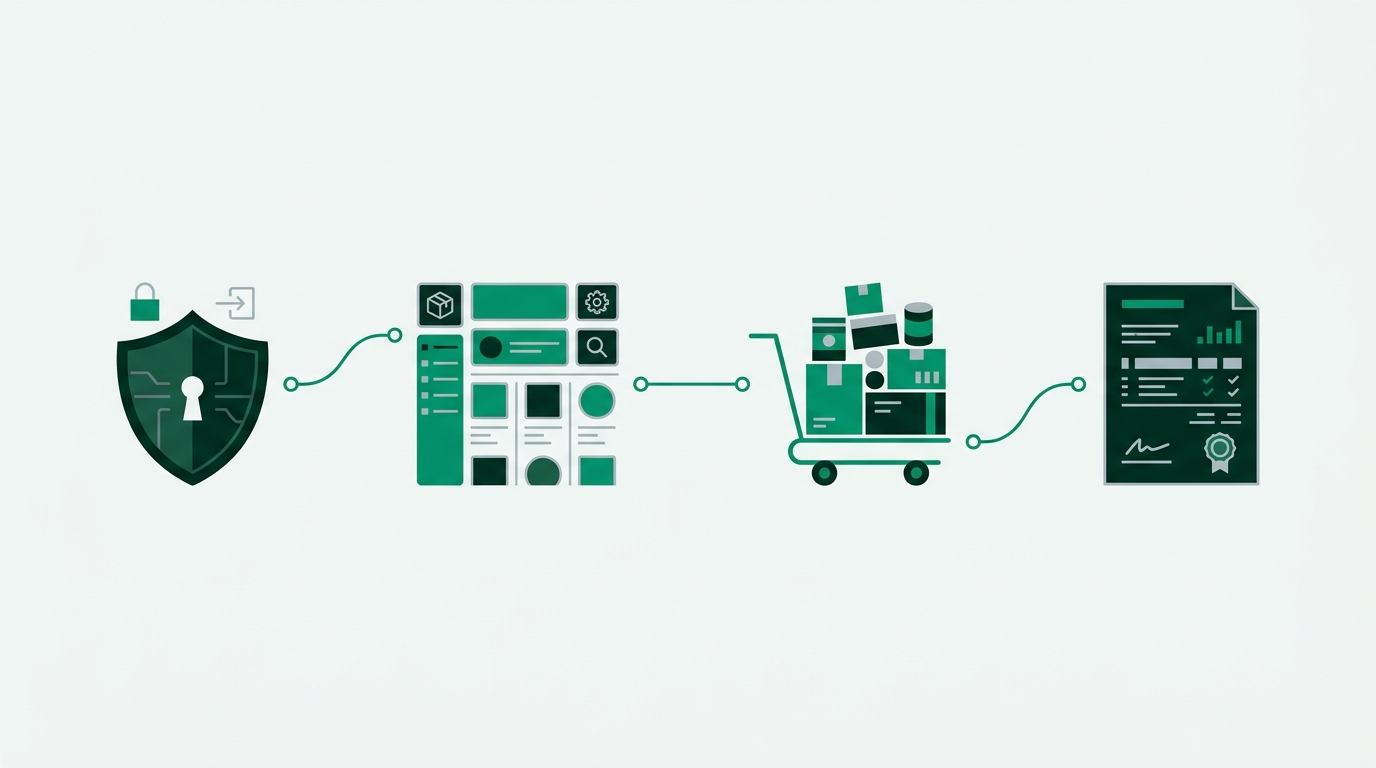
Decide who is allowed to see wholesale pricing, then build the gate. For most distributors that means an application form, manual or automated approval, and prices hidden from everyone who is not signed in to an approved account.
Do this first because it determines your whole architecture. If retail buyers can see case pricing, your retail partners will find it, and that conversation is worse than any technical problem on this list. PortalSphere handles it with wholesale registration forms plus restricted products and hidden prices, so an unapproved visitor sees the catalog as marketing and nothing more. Step by step: setting up a gated B2B portal on Shopify.
Step 2: Build your price tiers before you build the store
Get your pricing model on paper first. Most distributors land on three to five tiers keyed to annual volume or account type, plus a small number of negotiated accounts that sit outside the standard grid.
Two rules save a lot of rework. Keep the number of tiers small enough that a salesperson can recite them, because every extra tier is a maintenance cost forever. And decide up front whether a negotiated account gets a custom tier or a custom price list, because retrofitting that across a live catalog is painful. Once the model is settled the build is quick: see how to set up tiered wholesale pricing on Shopify.
Step 3: Set MOQs, pack sizes and quantity breaks
Order rules are what separate a distributor store from a retail store with bigger numbers. Three to configure:
- Minimum order quantity. Either a per-product unit minimum or an order-value minimum, enforced at checkout rather than requested in the terms and conditions.
- Pack and case sizing. If a SKU ships in cases of 24, the buyer should only be able to add multiples of 24. This is the single highest-value rule for reducing pick errors.
- Quantity breaks. Automatic price drops at defined thresholds, which nudge order size up without a rep negotiating each time.
Full walkthroughs: setting minimum order quantities and setting up volume discounts and quantity breaks.
Step 4: Offer the payment terms your buyers already expect
Trade buyers pay on terms. If your online channel demands a card at checkout while your phone channel offers net 30, buyers keep calling, and you conclude the portal failed when what actually failed was the payment step.
Approve terms per account rather than globally, set a credit limit alongside them, and let approved buyers check out against those terms. Reseller accounts also need tax exemption applied automatically rather than credited back later. See net 30 terms for wholesale customers and tax exemption setup.
Step 5: Connect the store to your back office
A distributor portal is only as good as what happens after the order. Inventory has to reflect what is really on the floor, and orders have to reach whatever system your warehouse and finance teams work in.
The useful architectural point: when your wholesale orders are standard Shopify orders, any existing Shopify-to-ERP or Shopify-to-accounting connector picks them up without custom work. That is a real advantage over a separate wholesale portal bolted alongside your store, which usually needs its own integration. Our Shopify ERP integration guide covers what syncs cleanly and what does not.
On the platform choice itself, Shopify's native B2B documentation covers company profiles and catalogs with per-company price lists, which is a reasonable baseline. Distributors typically outgrow it on order rules and the buyer-facing experience, which is the gap a dedicated wholesale layer fills. Still comparing? Start with our guide to choosing a wholesale ecommerce platform.
What does distributor ecommerce software cost?
The range is wide because the category spans two very different things. Purpose-built enterprise B2B platforms aimed at large distributors are typically quoted annually, land in five or six figures per year, and take months to implement. A wholesale distributor software layer on top of Shopify runs on a monthly subscription instead: PortalSphere is $49 to $399 per month depending on features, on top of your existing Shopify plan, with a 14-day free trial.
The decision is rarely about sticker price. It is whether you need a new platform or a new capability on the platform you already run. If your retail business is already on Shopify and the wholesale channel is the manual part, adding the B2B layer is faster and cheaper than replatforming. If you are on a legacy ERP-first stack with tens of thousands of SKUs and complex contract pricing, the enterprise platforms exist for a reason.
Frequently asked questions
What is the difference between B2B ecommerce and distributor ecommerce?
They are the same technology at different points in the supply chain. B2B ecommerce is any business selling to another business online. Distributor ecommerce is the subset where the seller buys in bulk from manufacturers and resells to retailers, contractors, or other trade buyers, which adds requirements around case-pack ordering, credit terms, and large repeat orders that a general B2B store may not need.
Can a distributor run B2B ecommerce on Shopify?
Yes. Shopify supports company accounts and per-company price lists natively, and a dedicated wholesale app adds the distribution-specific rules on top: minimum order quantities, pack sizing, quantity breaks, gated catalogs, net terms, and tax exemption. Most distributors running under roughly 10,000 SKUs find this covers the requirement without moving to a dedicated B2B platform.
Do I need a separate store for wholesale and retail?
Usually not, and separate stores create duplicate inventory and catalog maintenance. The better pattern is one store with gated wholesale access, so retail customers see retail pricing and approved trade accounts see their tier after logging in. We cover the trade-offs in our guide to selling wholesale and retail from one Shopify store.
How long does it take to launch a distributor ordering portal?
On an existing Shopify store with a clean catalog, a gated portal with tiered pricing and order rules is realistically a one to two week project, most of it spent deciding your pricing tiers rather than configuring software. Replatforming to an enterprise B2B platform is measured in months instead.
Will moving orders online replace my sales reps?
No, and distributors who position it that way get poor internal adoption. Self-service absorbs routine reorders, the low-value majority of order volume. Reps keep new accounts, negotiations, and upsell conversations, with more time for each because they are no longer keying in orders.
Run wholesale properly, on the Shopify store you already have
Tiered pricing, MOQs, pack sizing, net terms and tax exemption, set up for you on a draft store before it goes live.