How to Become a Wholesaler: 7 Steps and Requirements

To become a wholesaler in the US you need a registered business entity, an EIN from the IRS, and state-level permits: a seller's permit and a resale certificate, which together are what people mean by a wholesale license. There is no single federal wholesale license. Beyond the paperwork you need a wholesale price list that leaves retailers room to mark up, a minimum order quantity, stated payment terms, and a gated place for approved buyers to order. Most brands that already have product and an online store can be selling wholesale within two to four weeks, with filings costing roughly $50 to $500 plus any state permit fee. Regulated categories such as alcohol, tobacco and pharmaceuticals require additional licensing.
Key takeaways
- There is no single federal wholesale license in the US. What people call one is usually a state seller's permit plus a resale certificate.
- An EIN is free and issued by the IRS online in minutes. Any site charging for one is reselling a free service.
- Decide your model first: brand selling wholesale direct, merchant distributor holding stock, or broker holding none. Capital needs differ enormously.
- Price, MOQ and payment terms should be set and written down before you publish a price list you will have to defend.
- Gate wholesale prices behind buyer approval, then give approved accounts a place to reorder without you in the loop.
In this article
- What does it take to become a wholesaler?
- Step 1: Decide which kind of wholesaler you are becoming
- Step 2: Register the business and get an EIN
- Step 3: Get the permits people call a wholesale license
- Step 4: Set wholesale prices, minimums and terms
- Step 5: Build a catalog buyers can order from
- Step 6: Qualify and approve your buyers
- Step 7: Open the ordering channel
- How long does it take, and what does it cost?
- Frequently asked questions
What does it take to become a wholesaler?
Becoming a wholesaler is mostly a qualification exercise. You are asking two parties to take you seriously: a state tax authority, which needs to see a registered business buying goods for resale, and buyers, who need prices, minimums and terms worth the paperwork.
The market is worth the effort. US merchant wholesalers posted $801.3 billion in sales in July 2026 alone, up 13.0 percent year over year, according to the Census Bureau's Monthly Wholesale Trade report. Almost none of that moves through a retail checkout. It moves through purchase orders, price lists and net terms.
One clarification before the steps, because it splits the search results for this question in half. Real estate wholesaling, where you assign a property contract for a fee, has nothing to do with the product wholesaling covered here. If you sell physical goods in bulk to businesses that resell them, you are in the right place.
Step 1: Decide which kind of wholesaler you are becoming
How do you become a wholesaler? First by picking a model, because the licensing and the capital requirements diverge straight away.
- Brand selling wholesale direct. You already make or own a product and want retailers to stock it. Lowest barrier: you hold inventory you already own and add a B2B channel next to your retail store.
- Merchant wholesaler or distributor. You buy in bulk from manufacturers, hold the stock and resell it to retailers. This is what most people mean by "how to become a wholesale distributor". It needs real working capital and warehouse space.
- Broker or wholesale vendor without stock. You arrange sales between manufacturer and retailer and take a commission or a margin, without ever holding inventory. Lowest capital, thinnest margin, least control.
If you are a brand adding a wholesale channel rather than starting a distribution business from zero, our guide on how to start a wholesale business covers the operational build in more depth.
Step 2: Register the business and get an EIN
Register a legal entity with your Secretary of State first. An LLC is the usual choice for a new wholesale operation because it separates business liability from personal assets and because suppliers and buyers both expect to contract with an entity, not an individual.
Then get an Employer Identification Number. The IRS issues an EIN online in minutes and charges nothing for it. Any site asking you to pay for one is reselling a free service. You will need the EIN for your resale certificate, your business bank account, and almost every supplier application you fill in.
Open a dedicated business bank account at the same time. Wholesale runs on invoices and net terms, and reconciling those against a personal account becomes unworkable fast.

Step 3: Get the permits people call a wholesale license
There is no single federal wholesale license in the US. What people mean by the term is usually a combination of two state-level documents:
- A seller's permit or sales tax permit, which registers you to collect and remit sales tax in your state.
- A resale certificate, which lets you buy inventory tax free because the tax will be collected further down the chain, and which your own buyers will present to you.
Names and costs vary by state, from free to a few hundred dollars, and some states issue both under one number. Regulated categories add their own layer: alcohol, tobacco, firearms, pharmaceuticals and food handling all carry separate federal or state licensing. The Small Business Administration's guide to licenses and permits is the right starting point for checking your own category and state.
Becoming a licensed wholesaler is mostly a paperwork sprint, and we break the filings down in how to get a wholesale license.
Step 4: Set wholesale prices, minimums and terms
This is where most new wholesalers lose money quietly. Wholesale pricing is not retail pricing with a discount stapled on. It has to leave the retailer room for their own markup while still covering your cost of goods, your fulfillment and your terms risk.
The conventional starting point is keystone: wholesale at roughly half the recommended retail price, so the retailer doubles their money. Work backwards from your true landed cost to confirm that half of retail still clears a workable margin, and read what wholesale price means and how to calculate it before you publish a price list you will have to defend.
Alongside price, decide three things and write them down: your minimum order quantity, your case or pack sizes, and your payment terms. Net 30 is the default expectation for established retail buyers, and refusing it will cost you accounts. Offering it to every stranger who signs up will cost you more.

Step 5: Build a catalog buyers can order from
A wholesale buyer wants to see the item, the case pack, the wholesale price, the MOQ and the lead time in one place. Give them a line sheet that carries all five. Ours on how to make a wholesale line sheet has the format buyers actually expect.
A PDF line sheet is fine for a first pitch meeting. It stops being fine at reorder time, when a buyer emails a list of SKUs and someone on your side re-keys it. That step is where wrong quantities, expired prices and missed minimums come from, and every new account adds email threads rather than forecastable revenue.
Step 6: Qualify and approve your buyers
Wholesale prices are not for the public. If anyone can see them, your retail customers will ask why they are paying double, and your stockists will ask the same question louder.
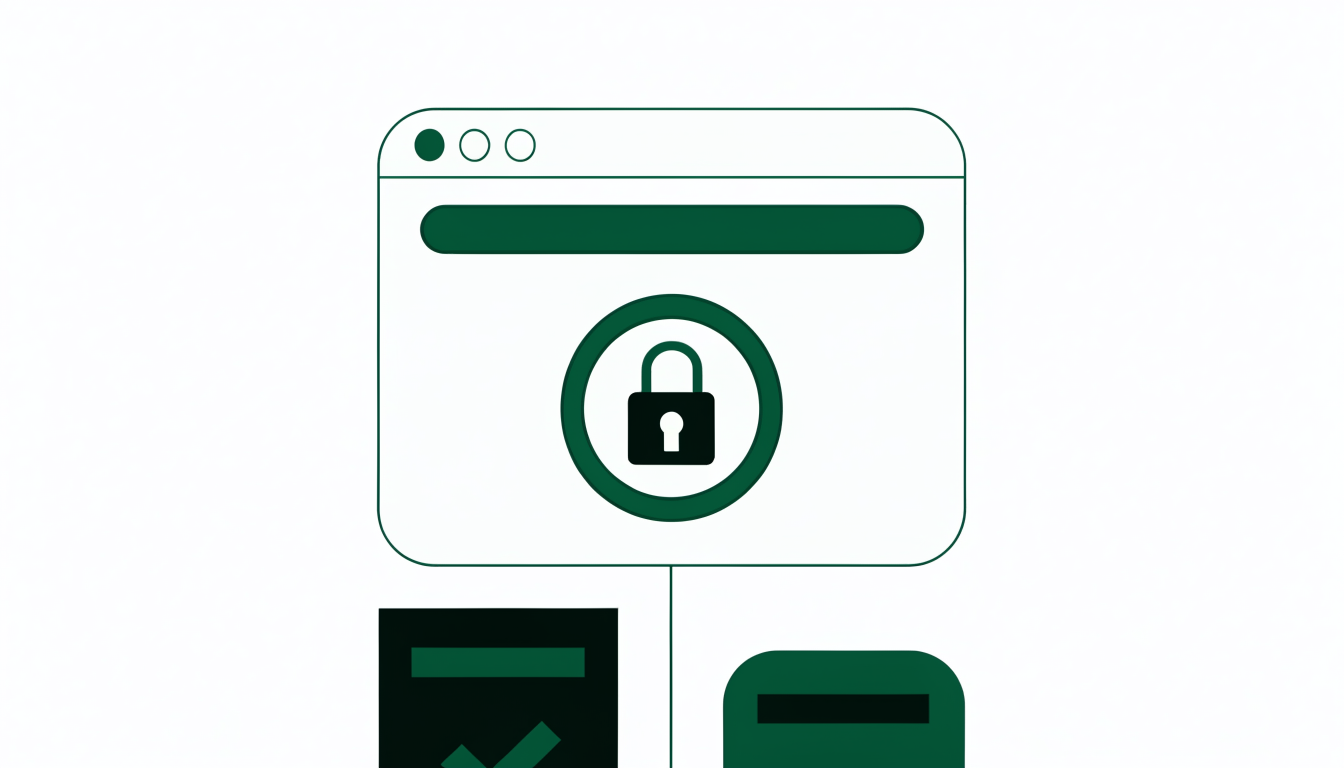
So gate the channel. Put a short application in front of the catalog that collects the business name, the EIN or resale certificate, the storefront or website, and the category they sell into. Approve manually at first. Once approved, the buyer signs in and sees their own prices, and nobody else does.
Qualification is also credit control. Net 30 is a loan to a stranger, so extend it to accounts with a trading history and take card or prepayment from everyone else until they have one.
Step 7: Open the ordering channel
You have a price list, minimums, terms and approved buyers. The last step is somewhere for them to place the order without you in the loop. For a brand already on Shopify, the honest choice is between running wholesale on email and spreadsheets or running it through the store you already have.
For any brand past a handful of accounts, a wholesale portal on your existing store wins on every criterion that costs you time: per-buyer pricing, enforced minimums, gated access and terms at checkout all become automatic rather than manual.
The rows that matter most are the ones that repeat. PortalSphere handles tiered pricing by customer group natively, so each approved buyer signs in to their own price list with no spreadsheet maintained per account. It enforces MOQs and pack sizes at checkout, so an order that breaks your minimum cannot be placed at all rather than being caught later by a human. It gates the catalog so wholesale prices stay invisible to retail shoppers, and applies net terms and tax exemption to the accounts that have earned them.
Email and spreadsheets do none of this automatically. They work for your first three accounts and become the reason you stop adding accounts around the fifteenth. For the build order, setting up a wholesale store on Shopify walks through it.
How long does it take, and what does it cost?
For a brand that already has product and a Shopify store, the realistic timeline is two to four weeks: a few days for entity registration, one to three weeks for the state permits depending on your state's processing, and a few days to set pricing tiers and open the portal.
Paperwork costs are modest: roughly $50 to $500 for entity registration depending on the state, nothing for the EIN, and free to a few hundred dollars for seller's permits. For a distributor buying stock to resell, inventory is the real number and it dwarfs everything above.
Frequently asked questions
How much does it cost to become a wholesaler?
The licensing side is cheap. Expect roughly $50 to $500 to register an LLC, nothing for an EIN, and anywhere from free to a few hundred dollars for a state seller's permit or resale certificate. The expensive part is inventory. A brand adding wholesale to products it already makes can start for a few hundred dollars in filings, while a merchant distributor buying stock to resell usually needs five figures of working capital before the first order ships.
Do you need a license to sell wholesale?
In the US there is no single federal wholesale license. You almost always need a state seller's permit or sales tax permit, and a resale certificate so you can buy inventory tax free. Regulated categories such as alcohol, tobacco, firearms, pharmaceuticals and some food products require additional federal or state licensing on top. Check your own state and product category before you order stock.
How do I become a wholesale distributor for a brand?
Approach the brand with a formed entity, an EIN, a resale certificate and a specific proposal: which territory or channel you would cover, which accounts you already sell to, and what volume you can commit to. Most brands will ask for trade references and a minimum first order. Distribution agreements are won on the accounts you can reach, not on the application form.
Can I become a wholesaler without holding inventory?
Yes, as a broker or wholesale vendor who arranges sales between manufacturer and retailer for a commission. You avoid the capital and the warehouse, but margins are thinner and you control neither stock nor lead times. Many brokers eventually move to holding at least fast-moving lines once volume justifies it.
Is real estate wholesaling the same thing?
No. Real estate wholesaling means putting a property under contract and assigning that contract to a buyer for a fee. It involves no goods, no resale certificate and no inventory. The two share a word and nothing else, which is why search results for this question mix them together.
Your first wholesale account, without the spreadsheet
PortalSphere adds gated B2B pricing, MOQs and net terms to the Shopify store you already run. 14-day free trial, no credit card, free onboarding included.