What Is B2B Ecommerce? Definition, Models, and Examples

B2B ecommerce is the sale of products or services from one business to another through an online store, portal, or marketplace instead of by phone, email, or a paper order form. The buyers are companies: retailers, distributors, clinics, contractors. What separates B2B ecommerce from retail ecommerce is not the product but the way the store behaves. A B2B store recognises the logged-in account first, then resolves the price from that account's group, contract, and order quantity. It gates the catalog behind approved logins, enforces minimum order quantities and case packs at the cart, allows payment on net-30 terms against a purchase order number, and suppresses sales tax for verified resale accounts. The four common models are wholesale, manufacturer to distributor, B2B2C, and business marketplaces.
Key takeaways
- B2B ecommerce is business-to-business selling through a store, portal, or marketplace rather than by phone, email, or paper order form.
- The defining difference from retail ecommerce is account awareness: price, eligibility, and payment terms are resolved per logged-in account.
- Four models cover almost everything: wholesale, manufacturer to distributor, B2B2C, and business marketplaces.
- The stages that stall most Shopify stores are per-customer pricing, enforced MOQs and pack sizes, and net-30 invoicing.
- Most brands under roughly $20 million in wholesale revenue are better served by one store with a gated B2B layer than by two storefronts.
In this article
- What is B2B ecommerce?
- How does B2B ecommerce work?
- What are the main types of B2B ecommerce?
- What is the difference between B2B and retail ecommerce?
- What does B2B ecommerce look like in practice?
- How do you start selling B2B online?
- Frequently asked questions
What is B2B ecommerce?
B2B ecommerce is business-to-business selling that happens through a website, portal, or marketplace instead of over the phone, by email, or on a paper order form. The buyer is a company: a retailer restocking shelves, a distributor filling a warehouse, a clinic ordering supplies, a contractor buying materials.
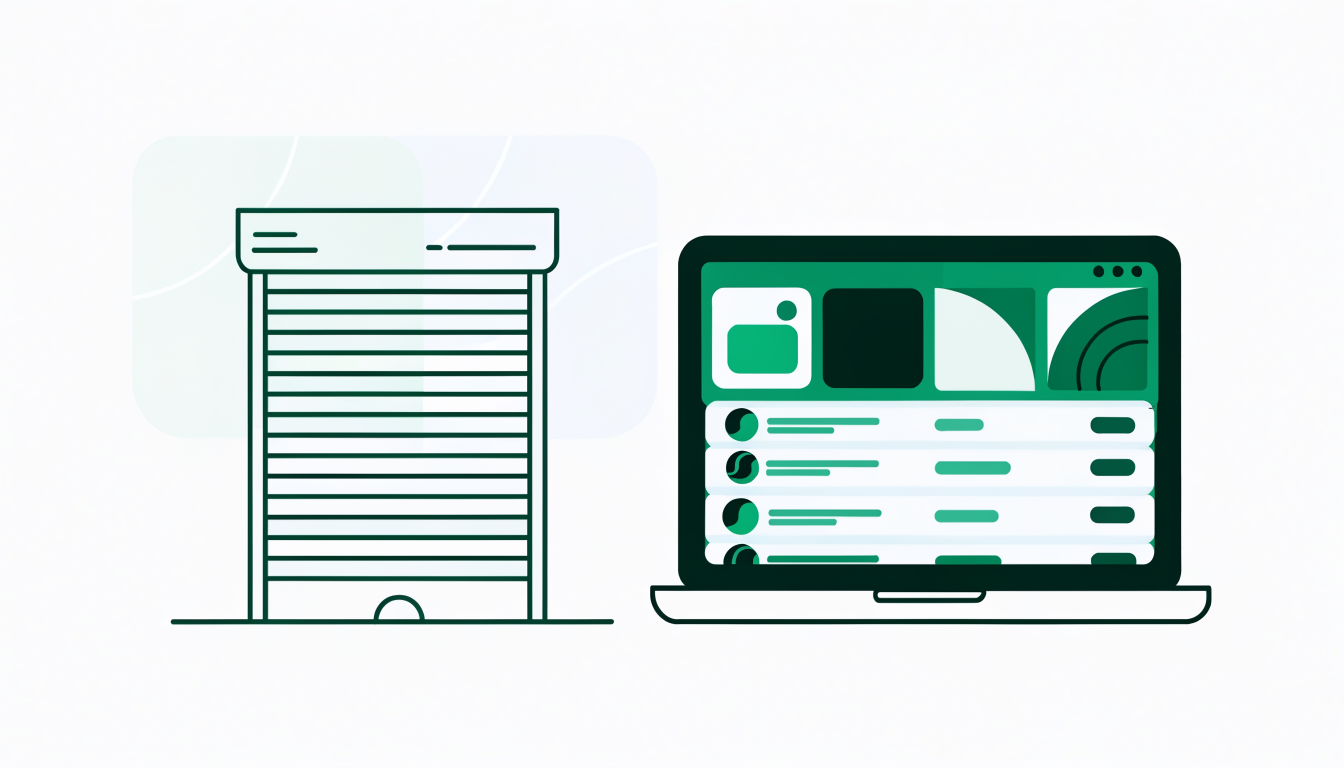
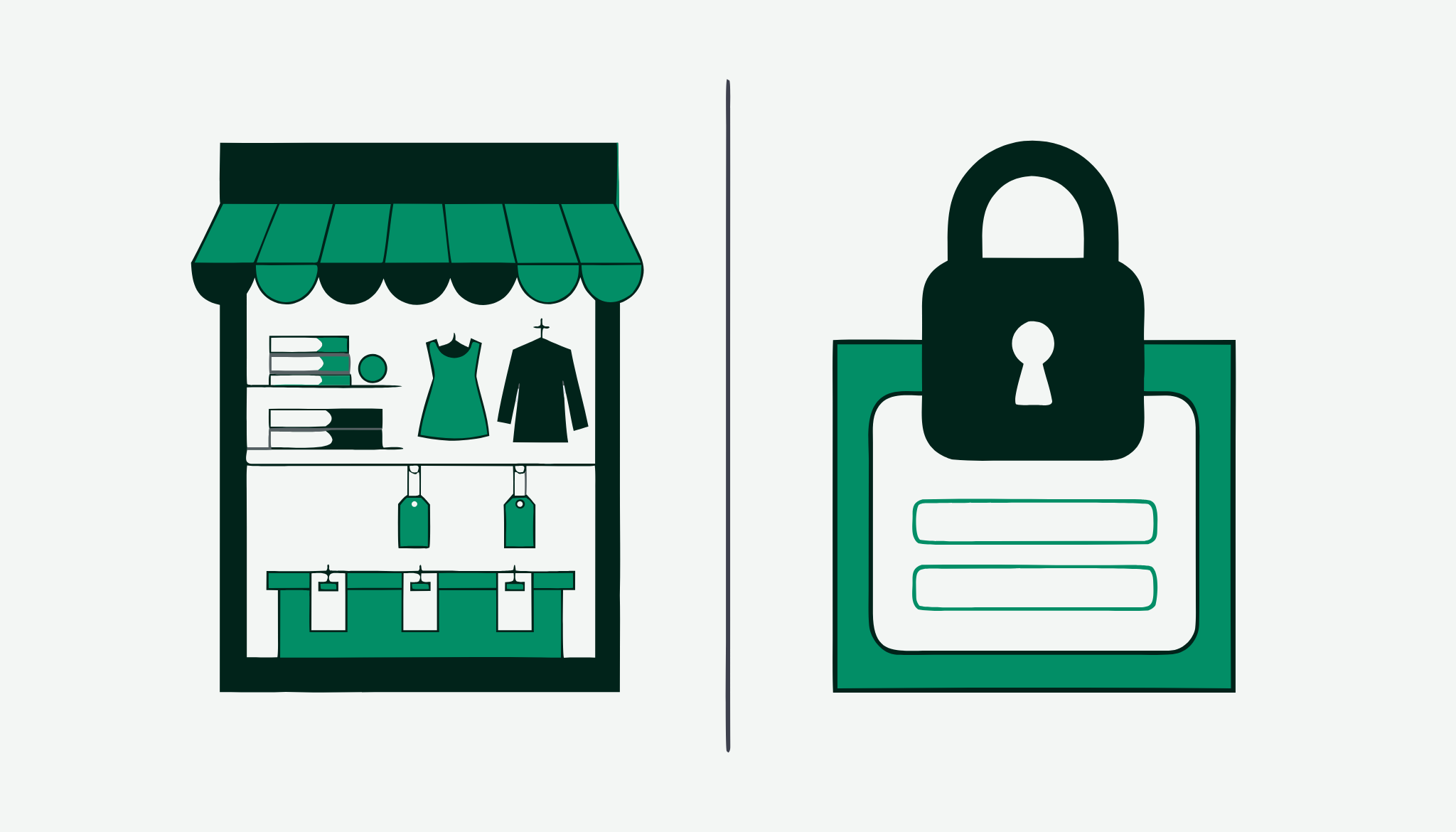
B2B ecommerce is not defined by what you sell. It is defined by how the store behaves. A retail store shows one public price to everyone and takes a card at checkout. A B2B store has to recognise who is logged in before it can show a price at all, because the price depends on the account, the contract, and the quantity. Everything else follows from that one difference, which is also why bolting a wholesale channel onto an ordinary storefront tends to go badly: approved accounts, negotiated pricing, order minimums, and invoicing are all account-aware by nature, and a public catalog has no concept of an account.
How does B2B ecommerce work?
A working B2B ecommerce setup runs the same lifecycle every time, and each stage maps to a specific store capability.
- Application and approval. A prospective buyer submits a wholesale application with a business name, resale certificate, and shipping details. Nothing about the catalog is visible yet.
- Account approval and tagging. You approve the account and assign it to a customer group, which is what later decides the prices that buyer sees.
- Gated catalog access. After login, the buyer sees the products they are entitled to buy. Some accounts see the whole catalog, others see only a contracted subset.
- Price resolution. The store calculates a price per account and per quantity: a percentage off list, a fixed contract price, or a volume break that improves at 12, 48, and 144 units.
- Order rules at the cart. Minimum order quantities, case packs, and minimum order values are enforced before checkout, not requested politely in a terms document.
- Checkout on business terms. The buyer pays by card or places the order on net-30 against a purchase order number, and sales tax is suppressed for verified resale accounts.
- Reorder. The buyer reorders from history in about a minute, which is where most of the ongoing revenue actually comes from.
Stages four, five, and six are where most Shopify stores stall. Registration forms and hidden prices are straightforward. Per-customer pricing, enforced pack sizes, and invoicing are the parts that either exist natively in your setup or turn into a spreadsheet somebody maintains by hand.
What are the main types of B2B ecommerce?
Four models cover almost everything that gets called B2B ecommerce.
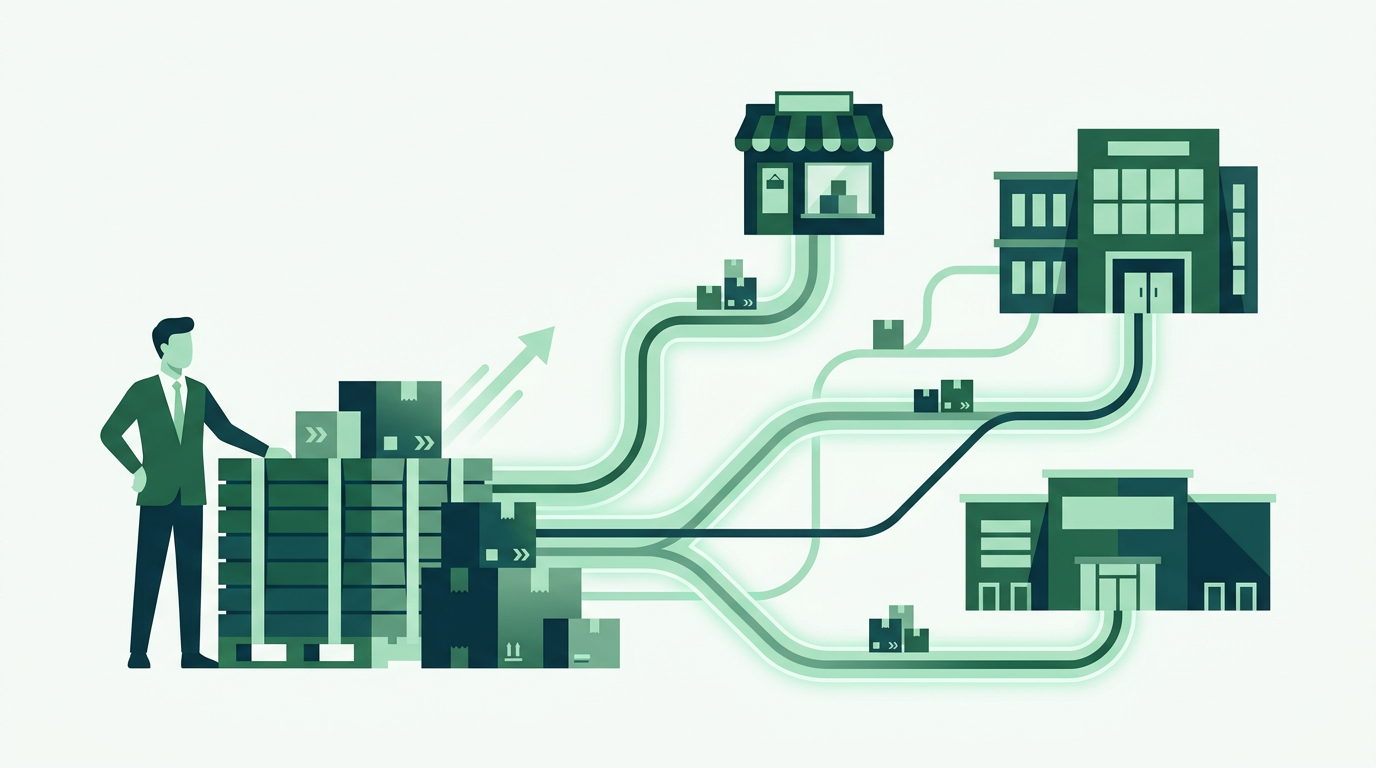
- Wholesale. A brand sells in bulk to retailers who resell at their own price. This is the most common model for Shopify brands, and the one most likely to start as email and spreadsheets.
- Manufacturer to distributor. A producer sells to distributors or wholesalers who handle storage, logistics, and regional coverage. Contract pricing and large order values dominate.
- B2B2C. A business sells through another business to reach the end consumer while keeping its own brand visible, for example a brand supplying a retail chain that ships to shoppers.
- Marketplaces. Platforms such as Amazon Business, Alibaba, or Faire connect many sellers to many business buyers. Reach is instant, margin and customer relationship are not yours.
Most growing brands end up running two of these at once, typically direct wholesale on their own store plus a marketplace presence for discovery. The economics differ enough that it is worth reading the comparison of Faire versus selling wholesale on your own Shopify store before deciding how much weight to put on each.
What is the difference between B2B and retail ecommerce?
The difference is not the product and it is not the order size. It is that a B2B store has to resolve price, eligibility, and payment terms per account, while a retail store publishes one price to the world. B2B ecommerce wins on account control and buying rules; retail ecommerce wins on frictionless public browsing.
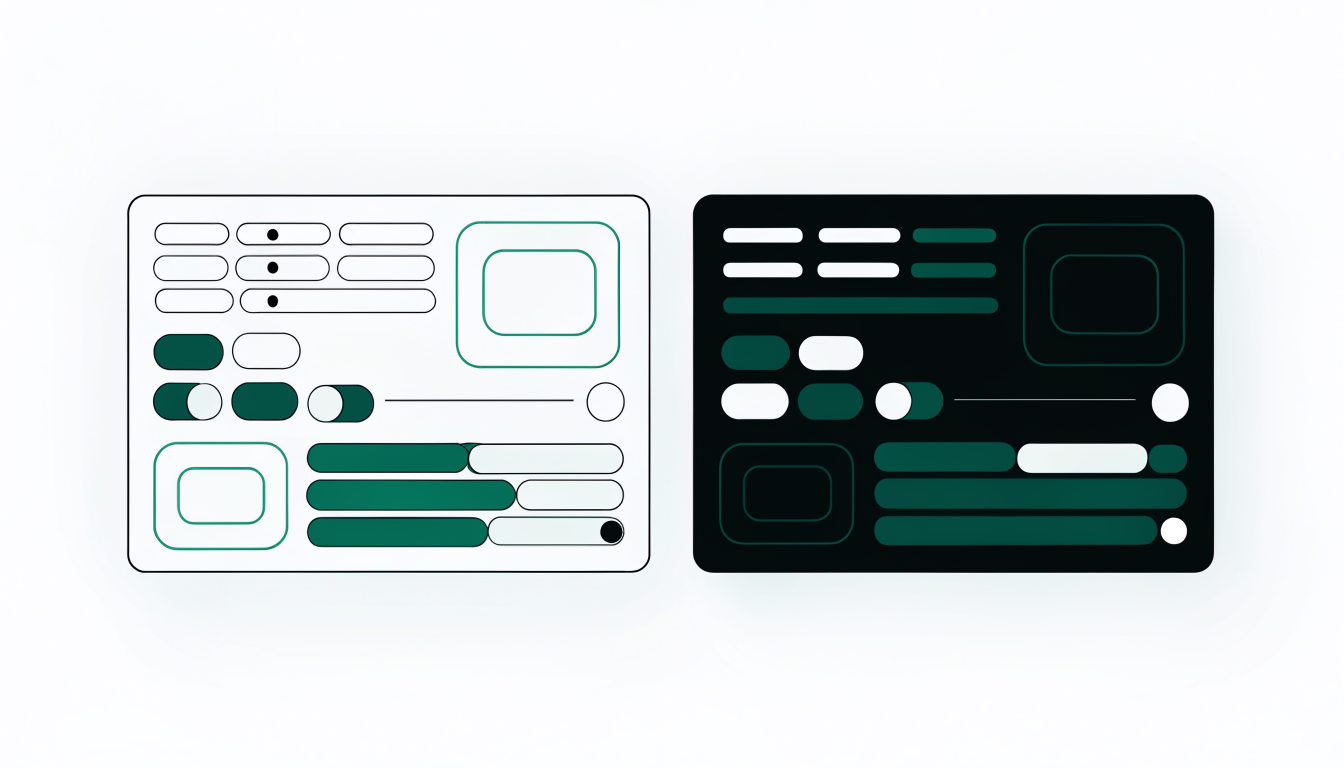
The rows that decide whether a wholesale channel works are the middle four. Tiered pricing by customer group means a buyer who negotiated 45 percent off list sees 45 percent off list on every product, without anyone issuing a manual discount code. Minimum order quantities and pack sizing have to be enforced in the cart, because a rule that lives in a terms PDF is a rule buyers break by accident. Net-30 terms against a purchase order number are what let a mid-sized retailer buy from you at all, since their finance team pays on invoice, not on a company card. Sales tax exemption matters because charging tax to a verified resale account is not a small annoyance, it is a reason the order gets placed by email instead.
Everything else is closer than people expect. B2B buyers now want the same speed and clarity they get shopping as consumers, and they are increasingly willing to spend serious money without a sales call: 73 percent of B2B buyers say they are willing to spend more than $50,000 on a single online order, and 39 percent would go past $500,000, both sharply up from two years earlier in McKinsey's B2B Pulse survey of 3,942 decision makers. For a deeper split of the two models, see our breakdown of B2B versus B2C ecommerce.
What does B2B ecommerce look like in practice?
A skincare brand approves 300 salon accounts, shows each a price list based on its tier, enforces a six-unit case pack, and lets the top 40 accounts order on net-30. A coffee roaster sells retail bags to consumers and 5 kilogram wholesale sacks to cafes from the same catalog, with the sacks hidden from public view. A parts manufacturer publishes a contracted catalog to each distributor, with prices that differ by contract and never appear to anyone else.
These are ordinary brands that decided their buyers should place orders themselves rather than wait on a rep. McKinsey's research on B2B buying finds buyers now move freely between in-person, remote, and self-service channels within a single purchase and expect all three to work. Self-service is no longer the cheap option, it is the default one.
How do you start selling B2B online?
If you already run a Shopify store, you do not need a second storefront to start. You need four things layered on the store you have: a way to gate prices behind an approved login, per-customer or per-group pricing, order rules such as minimums and pack sizes, and business payment terms.
The practical sequence is to publish a wholesale application page, approve your first accounts by hand, set tiered pricing for two or three customer groups, then add net terms once you know which accounts have earned them. Our guide to setting up wholesale on Shopify walks through it step by step, and the B2B ecommerce platform buyer's guide covers what to do when you outgrow the simple version. If you would rather see the underlying capability first, PortalSphere's wholesale selling features show how gated access, tiered pricing, MOQs, and net terms fit together on one Shopify store.
Frequently asked questions
What is an example of B2B ecommerce?
A brand that lets approved retailers log in, see their own negotiated prices, order by the case, and pay on net-30 invoice is running B2B ecommerce. Amazon Business, Alibaba, and Faire are marketplace examples, while a Shopify store with a gated wholesale portal is the direct example most growing brands build.
Is B2B ecommerce the same as wholesale?
No. Wholesale is one model within B2B ecommerce, specifically selling in bulk to businesses that resell your product. B2B ecommerce also covers manufacturer to distributor selling, B2B2C arrangements, and business marketplaces, including sales to companies that consume the product rather than resell it.
How does B2B ecommerce work on Shopify?
Shopify supports B2B either through the native B2B features on Shopify Plus or through a wholesale app layered on any plan. Both approaches do the same job: gate the catalog behind approved company accounts, resolve prices per customer group, enforce order minimums, and allow payment on terms. The difference is cost and how much of it works without custom code.
Is B2B ecommerce bigger than B2C ecommerce?
Considerably. Business-to-business trade moves far more value than consumer retail, and forecasts from eMarketer put US site-based B2B ecommerce sales on a path toward roughly $3 trillion by 2028. The channel is also less mature, which is why buying experiences vary so widely between suppliers.
Do I need a separate store for B2B and retail?
Usually not. For most brands under roughly $20 million in wholesale revenue, one Shopify store with a gated B2B layer is cheaper to run and easier to keep in sync than two storefronts with duplicated inventory and product data. Two stores start making sense when the catalogs, branding, or fulfilment operations genuinely diverge.
Turn the Shopify store you already run into a B2B store
PortalSphere adds gated catalogs, tiered pricing, MOQs, and net terms to your existing store. 14-day free trial, free onboarding.