B2B Ecommerce Integration: The 8 Systems to Connect First

B2B ecommerce integration is the work of connecting your wholesale storefront to the other systems that run the business, so an order placed online updates every one of them without anyone retyping it. For most Shopify brands that means four connections in this order: accounting (QuickBooks Online or Xero), inventory or ERP, CRM, then your 3PL or shipping platform. Tax, payments, PIM and EDI follow once volume justifies them. The part that trips people up is that B2B data is not retail data. Customer-specific pricing, minimum order quantities, pack sizes and net-30 terms all have to survive the trip, and most generic connectors were built for retail carts that get paid at checkout. Choose tools that understand company accounts and open invoices, or you will reconcile by hand anyway.
Key takeaways
- Sequence beats coverage: connect accounting first, then inventory or ERP, then CRM, then fulfilment.
- Net terms orders must post to accounting as open invoices, not paid sales receipts, or your AR aging report is empty.
- Shopify B2B company accounts do not map one to one onto accounting customer records, so define that mapping before you switch a sync on.
- Generic retail connectors routinely drop customer-specific pricing, MOQs and pack sizes. Test those fields with a real order before you trust them.
- EDI and custom API builds are reactive purchases. Add them when a specific account or system demands it, not up front.
In this article
- What is B2B ecommerce integration?
- 1. Accounting: QuickBooks Online, Xero and the net terms trap
- 2. ERP and inventory: one source of truth for stock
- 3. CRM: stop reps rebuilding the same order twice
- 4. 3PL and shipping: tracking your buyers can check themselves
- 5. Tax and exemption certificates
- 6. Payments and net terms
- 7. PIM: one product record for retail and wholesale
- 8. EDI: only when a big retail account demands it
- How should you sequence these integrations?
- Frequently asked questions
What is B2B ecommerce integration?
B2B ecommerce integration is the work of connecting your wholesale storefront to the other systems that run the business, so a single purchase order updates all of them without anyone retyping it. In practice that means your accounting ledger, your inventory or ERP records, your CRM, and your fulfilment provider all learn about the same order within minutes of it being placed.
This is harder than a retail integration because B2B orders carry data retail orders do not: a customer-specific price, a minimum order quantity, a pack size, and often a payment term meaning no money changed hands at checkout. Generic connectors were built for a retail cart that gets paid instantly, so those four fields are exactly the ones that go missing. Every decision below comes back to whether the tool understands that difference.
The stakes are rising. McKinsey's 2026 B2B Pulse survey found buyers now use an average of ten channels across a purchase, and 73% are comfortable placing orders above $50,000 online, up from 59% in 2022. Order values that size do not survive a manual re-key.
1. Accounting: QuickBooks Online, Xero and the net terms trap
Connect accounting first. It is the system where a bad sync costs you real money rather than just time, and it is the one most likely to break quietly.
The specific failure to watch for: a wholesale portal that integrates with QuickBooks Online should post a net-30 order as an open invoice, not as a paid sales receipt. Webgility's teardown of Shopify to QuickBooks syncs documents this as the most common B2B error. If terms orders land as receipts, QuickBooks generates no receivable, your AR aging report is empty, and revenue that has not arrived shows up as cash. A brand with twenty accounts on net 30 can be carrying tens of thousands of dollars it cannot see.
Two more things to test. First, customer mapping: Shopify B2B uses company accounts with multiple locations, while QuickBooks tracks receivables against a single customer record, so multi-location accounts get misrouted unless you define the mapping deliberately. Second, tax: an exempt order must sync as exempt, not as a zero-rated line your accountant reclassifies at quarter end.

2. ERP and inventory: one source of truth for stock
Once the money is right, fix the stock. The classic wholesale failure is selling a pallet of something you already promised to a retail customer, because the storefront and the warehouse system each hold their own count.
An ERP integration should push inventory levels in one direction only, from whichever system is authoritative, and pull orders back with the wholesale price intact. That last clause matters. If your ERP holds list price but your storefront applies a tier discount at checkout, the order must arrive at the price the buyer actually paid, or margin reporting drifts every month.
Smaller catalogs often do not need a full ERP. If your only real problem is stock accuracy across two channels, an inventory tool solves it for a fraction of the cost. The deeper version is in our B2B ecommerce ERP integration guide for Shopify.
3. CRM: stop reps rebuilding the same order twice
If you have sales reps, your CRM integration is what stops them working from a parallel universe. The goal is modest and worth it: every online order appears on the account record, so a rep opening HubSpot or Salesforce sees the same reorder history the buyer sees in their portal.
The high-value direction is often the reverse one. Pushing account status, credit limit and assigned rep from the CRM into the storefront lets the portal show the right catalog and terms without anyone updating two systems. Keep the field list short: most CRM syncs fail because someone mirrored forty fields instead of the six that change decisions.
4. 3PL and shipping: tracking your buyers can check themselves
Wholesale buyers chase shipments more than retail buyers do, because their own customers are waiting. Every one of those emails is a support cost you can delete with an integration.
Connect your 3PL or shipping platform so orders flow out automatically and tracking numbers flow back onto the order record in the buyer's portal. Watch two wholesale-specific details: pallet and carton quantities must survive the handoff intact, and split shipments must show as partial fulfilments rather than closing the order. Pass the purchase order number through as a reference too, because that is the number your buyer's warehouse quotes when something goes wrong.

5. Tax and exemption certificates
Most wholesale orders are tax exempt, and most tax headaches come from certificates that live in a filing cabinet instead of the system. An integration with a tax engine, or with your storefront's own exemption handling, should check whether a valid resale certificate is on file at the moment of checkout and apply exemption automatically.
The test is whether an expired certificate blocks the exemption without blocking the order. If your setup silently keeps exempting a customer whose certificate lapsed eighteen months ago, that is a liability sitting on your books. See our walkthrough of tax exemption for wholesale customers on Shopify.
6. Payments and net terms
Payment integration for B2B is not the same job as retail checkout. You need a path for buyers who pay by card, and a separate path for approved accounts who place an order now and pay against an invoice later.
Whatever you use, the integration has to answer three questions at checkout: does this account have terms, what is their credit limit, and are they over it. Handling that inside the storefront rather than in a spreadsheet is the difference between offering terms and administering them. Our guide to offering net 30 terms on Shopify covers the mechanics.
7. PIM: one product record for retail and wholesale
A PIM integration earns its place once the same product needs different data for different audiences: retail copy and lifestyle images on the DTC side, spec sheets, case quantities and carton dimensions on the wholesale side.
Below roughly a thousand SKUs, most brands manage this with disciplined product metafields and skip the PIM entirely. Above that, or when you syndicate to distributor catalogs and marketplaces, a PIM stops the same product description existing in four slightly different versions.
8. EDI: only when a big retail account demands it
EDI is the oldest B2B integration standard and still the price of entry with large retailers and distributors, who will send you purchase orders as 850 documents and expect 810 invoices back.
Do not build for EDI speculatively. It is expensive, it is per-trading-partner, and modern API connections cover everything else. Add it when a specific account requires it, and route it through an EDI provider rather than building the mapping yourself.
How should you sequence these integrations?
Accounting, then inventory, then CRM, then fulfilment. Everything else waits until a real problem asks for it. The reason for that order is that each step removes a category of error that the next step would otherwise inherit.
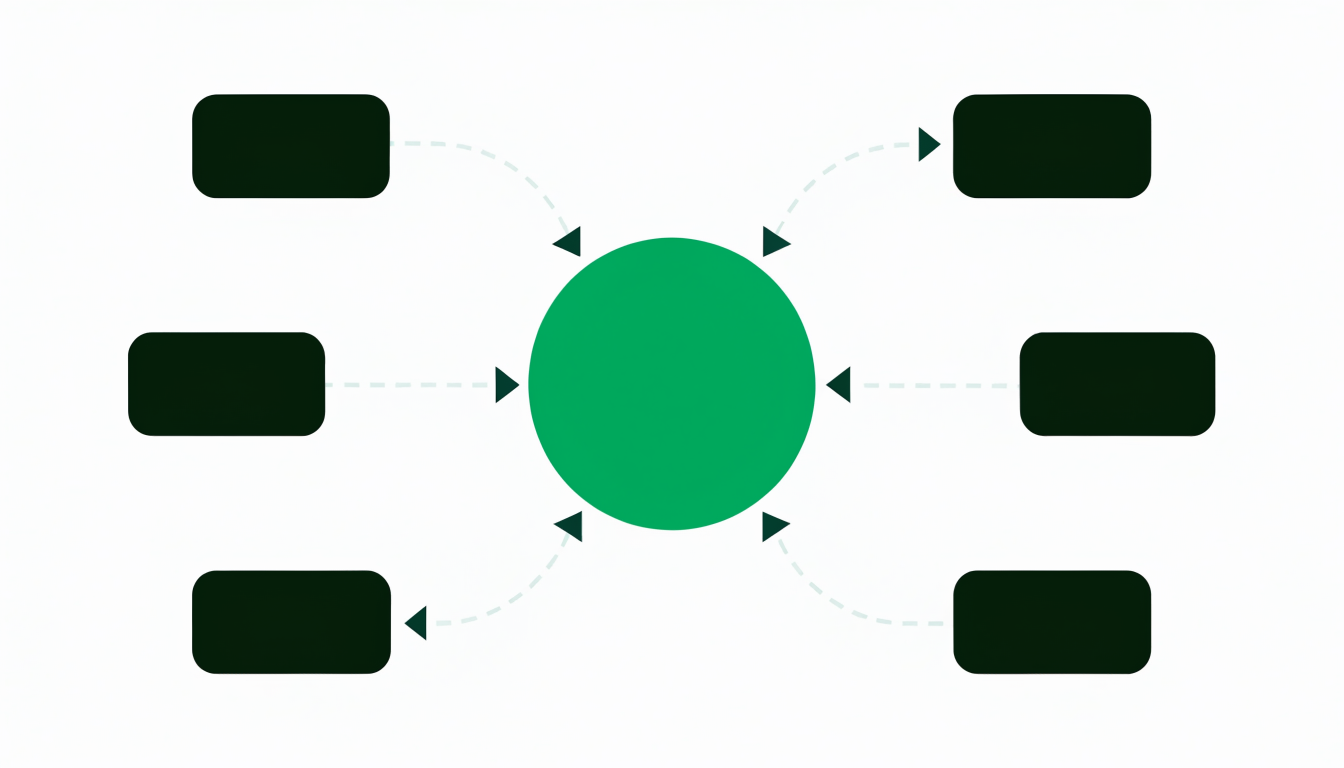
You then have three ways to actually build each connection. For B2B specifically, a purpose-built connector wins on the wholesale fields, an iPaaS platform wins on breadth, and a custom build only pays off at real volume.
Reading the rows that decide it: a purpose-built B2B connector already knows what a customer-specific price and a payment term are, so tiered pricing and net-30 invoicing arrive correctly without you defining the mapping, and there is nothing to maintain afterwards. An iPaaS platform connects almost anything, which is why it belongs on the long tail rather than the core: wholesale fields like MOQs and pack sizes need custom mapping and can drop silently when a schema changes upstream. A custom API build does all of it perfectly and is the honest answer when your systems are genuinely unusual, but you are buying weeks of engineering plus permanent maintenance.
Underneath all three sits the same prerequisite: the wholesale data has to be correct in the storefront before anything downstream can read it. PortalSphere handles that layer natively, keeping tiered pricing, volume discounts, MOQs, pack sizing and net terms inside Shopify rather than in a spreadsheet no connector can see. If you are still choosing the platform underneath, start with our complete B2B ecommerce platform buyer's guide.
Frequently asked questions
What is B2B ecommerce integration?
B2B ecommerce integration is the process of connecting a wholesale storefront to the other systems a business runs on, typically accounting, ERP or inventory, CRM, and a 3PL, so that one order updates all of them automatically. It differs from retail integration because B2B orders carry customer-specific prices, minimum order quantities, pack sizes and payment terms that generic connectors often drop.
Which system should I integrate first?
Accounting. A broken accounting sync creates financial errors rather than inconvenience, and net terms orders that post as paid receipts leave you with no accounts receivable record at all. Fix that, then inventory or ERP, then CRM, then fulfilment.
Can a B2B wholesale portal integrate with QuickBooks Online?
Yes. The requirement to check is that the connector creates open invoices for net terms orders instead of paid sales receipts, maps Shopify company accounts to the right QuickBooks customer record, and carries tax exemption through. Place one test order on terms and confirm it appears in your AR aging report before you rely on the sync.
Do I need an ERP to sell wholesale on Shopify?
No. Most brands under a few thousand orders a month run wholesale on Shopify with a B2B app for pricing and ordering plus an inventory tool for stock accuracy. An ERP becomes worth the cost when manufacturing, multi-warehouse logistics or complex financial consolidation enter the picture.
How much does B2B ecommerce integration cost?
App-based connectors for accounting, inventory and shipping generally run from tens to a few hundred dollars per month each, and an iPaaS platform sits in a similar range depending on task volume. Custom development is the outlier, typically starting in the thousands with ongoing maintenance, so defer it until a purpose-built option genuinely cannot do the job.
Is EDI still necessary in 2026?
Only for specific trading partners. Large retailers and distributors still transact over EDI documents such as the 850 purchase order and 810 invoice, so you need it to sell into those accounts. Everyone else can be served over modern APIs, so add EDI reactively rather than up front.
Fix the wholesale data before you fix the plumbing
PortalSphere keeps tiered pricing, MOQs, pack sizing and net terms native in Shopify, so every integration downstream has something clean to read. 14-day free trial, free onboarding, no credit card.