B2B Customer Onboarding Best Practices: 9 Steps for Wholesale


B2B customer onboarding is the process of taking a wholesale buyer from first application to an approved account that can place a correctly priced order. The best practices that matter most, in the order they happen: qualify buyers with a structured application form, approve or reject within one business day, gate prices and products until approval, assign a pricing tier before the first login, enforce MOQs and pack sizes in the cart, decide payment terms and credit limits at approval, collect tax exemption certificates up front, send a short welcome sequence that ends in a first order, and track time to first order as your core metric. On Shopify, all nine can run automatically inside a self-serve B2B portal, so a new stockist registers, gets approved, sees their own prices and orders without a single email.
Key takeaways
- Approval speed is the biggest lever in B2B customer onboarding. Set a one business day service level and auto approve the segments you do not need to vet.
- Assign the pricing tier at approval, not on request, so the buyer's first catalog view already shows their price.
- Enforce MOQs, pack sizes, net terms and tax exemption on the account itself, so the first order is correct without anyone checking it by hand.
- Measure time to first order across four checkpoints (applied, approved, first login, first order), not the number of accounts approved.
- All nine steps can run self-serve on a standard Shopify plan, no Plus upgrade required.
In this article
- What B2B customer onboarding means in wholesale
- 1. Qualify buyers with a structured wholesale application
- 2. Approve or reject within one business day
- 3. Gate prices and products until the account is approved
- 4. Assign a pricing tier before the first login
- 5. Set MOQs and pack sizes so the first order is a valid order
- 6. Decide payment terms and credit limits during onboarding
- 7. Collect tax exemption certificates up front
- 8. Send a short welcome sequence that ends in a first order
- 9. Track time to first order and fix the slowest step
- Portal onboarding vs email and spreadsheets
- FAQ
What B2B customer onboarding means in wholesale
In wholesale, onboarding is not a welcome email. It is the sequence that turns an interested retailer into an approved account with the right prices, the right minimums, the right payment terms and a first purchase order. Every step in that sequence is a place the buyer can drop out.
The pressure to get it right has gone up. McKinsey's 2026 Global B2B Pulse Survey found that 73% of B2B buyers are now comfortable placing orders above $50,000 online, up from 59% in 2022, and that the top reason buyers switch suppliers is inconsistent information across teams. A buyer who is quoted one price by email and shown another at checkout has already learned something about you.
The nine practices below follow the real order of events: application, approval, access, pricing, minimums, terms, tax, activation, measurement.
1. Qualify buyers with a structured wholesale application
A generic contact form gives you a name and an email, which means a human has to email back and ask everything that matters. A wholesale application should collect it once: legal business name, business type, resale or tax ID, shipping and billing addresses, estimated monthly volume, the categories they want to carry, and whether they are requesting payment terms.
Make the fields you gate on required and leave the rest optional. A twelve field form scares off good stockists, and a three field form guarantees a week of back and forth. If you are still taking orders on a PDF, replace it with a wholesale order form on Shopify so the application and the ordering flow live in one place.

2. Approve or reject within one business day
Approval speed is the single biggest lever in B2B customer onboarding, because it is the only step where the buyer is doing nothing but waiting. A retailer who applies on Tuesday and hears nothing by Friday has usually already opened a competitor's line sheet.
Set a one business day service level and build the review so it can be met: a queue that notifies the right person, a three point checklist (is the business real, is the tax ID valid, does the category fit), and a polite rejection template. Auto approve the segments you do not need to vet, such as existing retail customers or trade show leads. For the review queue and the gated account it unlocks, see our guide to setting up a gated B2B portal on Shopify.
3. Gate prices and products until the account is approved
Wholesale pricing on a public page does two kinds of damage: it undercuts your own retail channel, and it shows competitors your margins. Gating also gives the application a reason to exist.
The practical version is three layers. Hide prices from logged out visitors, hide wholesale-only products entirely, and show a clear "apply for access" prompt instead of a broken looking empty price. Our walkthrough of how to hide prices on Shopify until customers log in covers the three ways to do it and where each one breaks.
4. Assign a pricing tier before the first login
The worst version of onboarding approves the account and then makes the buyer ask what their price is. Assign the customer group and its discount at the moment of approval, so the first catalog they ever see already shows their numbers.
Keep the tier structure small enough to explain in one sentence. Three or four groups (opening order, standard stockist, key account, distributor) covers most brands, and a flat percentage per group is easier to defend than a bespoke price list per customer. Shopify models this by attaching buyers to a company record: a customer can belong to only one company but multiple company locations, which is how multi-store retailers should be set up. For the mechanics, see how to set up tiered wholesale pricing on Shopify.

5. Set MOQs and pack sizes so the first order is a valid order
A first order that violates your minimums is worse than no first order, because someone now has to email a new customer and tell them to redo it. Enforce the rules in the cart instead: an order value or unit minimum per account, case packs where you ship by the case, and increment rules so quantities can only move in sixes or twelves.
Show the rule before it is broken. "Minimum 24 units, add 6 more" converts. A blocked checkout with a generic error does not. Our guide to setting minimum order quantities on Shopify wholesale covers per-product, per-tier and per-order minimums.
6. Decide payment terms and credit limits during onboarding
Payment terms are the step most brands defer, and deferring it turns a two day onboarding into a three week one. Decide at approval whether the account is prepay, card on file, or net terms, and set the credit limit at the same time.
A workable default: everyone starts prepay for their first two orders, then qualifies for net 30 up to a stated limit once they have a payment history with you. That gives you a rule instead of a negotiation. See how to offer net 30 terms to wholesale customers on Shopify for how to attach terms to the account rather than approving them order by order.
7. Collect tax exemption certificates up front
Resale certificates are an onboarding document, not an accounting problem to solve later. If you collect the certificate during the application and attach the exemption to the account, the buyer never sees sales tax they should not be charged, and you never issue a credit note to fix it.
Store the certificate against the account with its expiry date and a reminder before it lapses. US exemption rules are state by state, so record which state it covers. Our walkthrough covers tax exemption for wholesale customers on Shopify.
8. Send a short welcome sequence that ends in a first order
Approval is not activation. A three message sequence does more than a long welcome PDF nobody opens.
- Message 1, on approval: login link, their pricing tier, the minimum order, and one line on how to reorder.
- Message 2, day 3 if no order: the five best sellers in their category, with their price shown.
- Message 3, day 10 if no order: a named contact and an offer to build the opening order for them.
Every message should link straight into the portal, not to a generic homepage. The goal of the sequence is one number: a first purchase order.
9. Track time to first order and fix the slowest step
Most brands measure how many wholesale accounts they approved. That is a vanity number. The metric that predicts revenue is time to first order, measured from application submitted to first order placed, and the drop-off rate at each step in between.
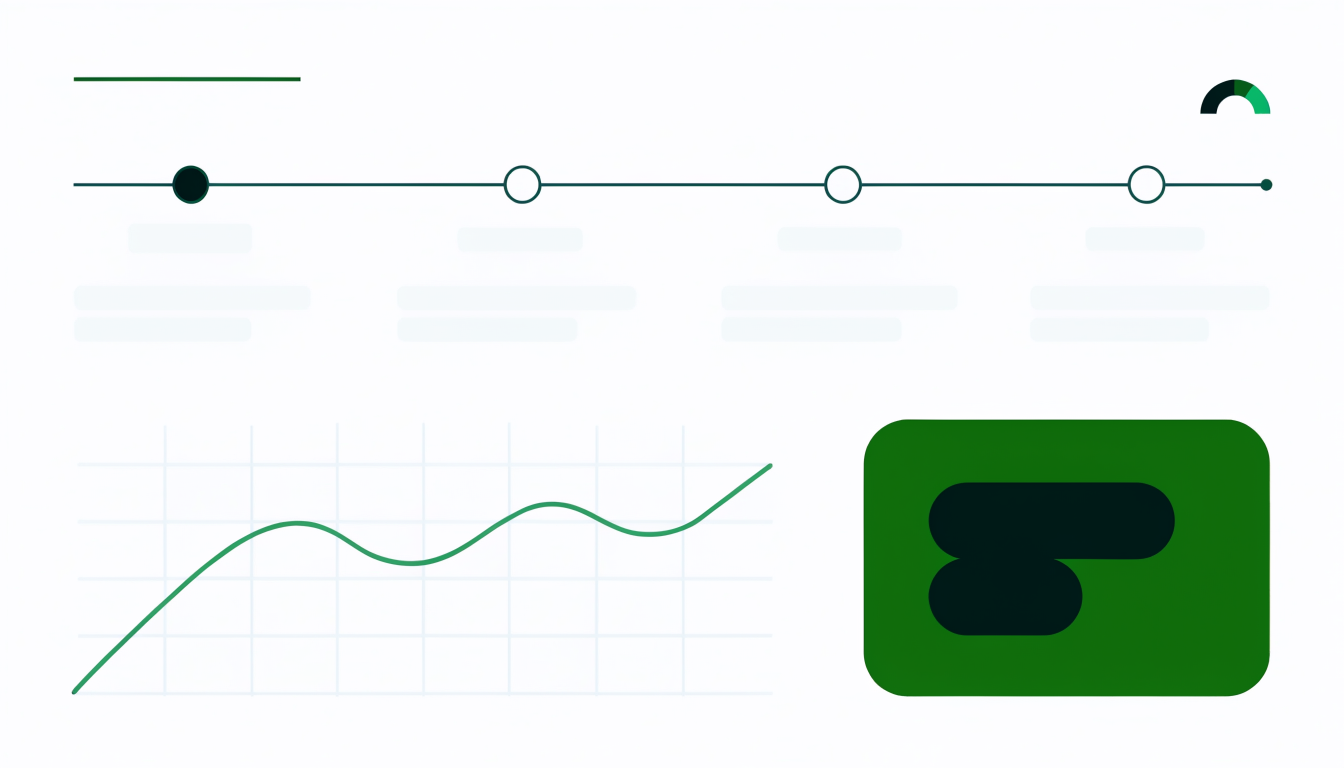
Instrument four checkpoints: applied, approved, first login, first order. Whichever gap is widest is your onboarding problem, and it is almost always one of two things, approval latency or a buyer who logged in and could not work out their price. Both are fixable in a week.
Portal onboarding vs email and spreadsheets
On the criteria that decide whether a stockist places a first order, a self-serve B2B portal wins every step that involves waiting for a person. Email and spreadsheets can do all nine, but each becomes an office-hours task.
What the rows actually mean
PortalSphere handles the application, the approval queue and the gated catalog natively, so a retailer can register at 9pm and see their own prices the moment someone clicks approve, with no rekeying into a spreadsheet. Tiered pricing and MOQs attach to the customer group rather than to a discount code, which is why the rules hold at checkout instead of being checked by a human afterwards. Net terms and tax exemption are set on the account at approval, so the first order is already correct.
Running the same nine steps on email and spreadsheets is possible, and plenty of brands do it. The cost is that prices live in a document that can drift from what the buyer is charged, and nobody can tell you how long onboarding actually takes because the data was never in one system.
Frequently asked questions
What is B2B customer onboarding?
B2B customer onboarding is the process of taking a business buyer from first application to an approved account that can place a correctly priced order. In wholesale it covers the application form, vetting and approval, catalog and price access, pricing tier assignment, minimum order rules, payment terms, tax exemption, and the activation sequence that produces a first purchase order.
How long should wholesale account approval take?
Aim for one business day, and under four hours for applicants you can auto approve. Approval is the only onboarding step where the buyer can do nothing but wait, so latency there converts directly into drop-off. Publish the timeframe on the application page.
What should a wholesale application form ask for?
Legal business name, business type, resale or tax ID, billing and shipping addresses, a business email and phone, estimated monthly order volume, the product categories they want to carry, and whether they are requesting payment terms. Make only the fields you gate on required, so the form takes two minutes rather than ten.
Should wholesale prices be hidden from the public?
Yes in almost every case. Public wholesale pricing undercuts your retail channel and hands competitors your margin structure. Hide prices from logged out visitors, hide wholesale-only products entirely, and show an apply-for-access prompt in place of the price.
Can you onboard B2B customers on Shopify without upgrading to Plus?
Yes. Shopify's native B2B features require Plus, but a wholesale app can run the full onboarding flow, registration, approval, gated pricing, tiers, MOQs, net terms and tax exemption, on a standard Shopify plan. PortalSphere is built for exactly that, and installs on your existing store rather than a second one.
Onboard your next stockist without a single email
PortalSphere runs the application, approval, pricing tier, minimums and first order inside your existing Shopify store. Free onboarding included, no credit card required.