How to Get Your Product Into Retail Stores: A Shopify Brand's Playbook

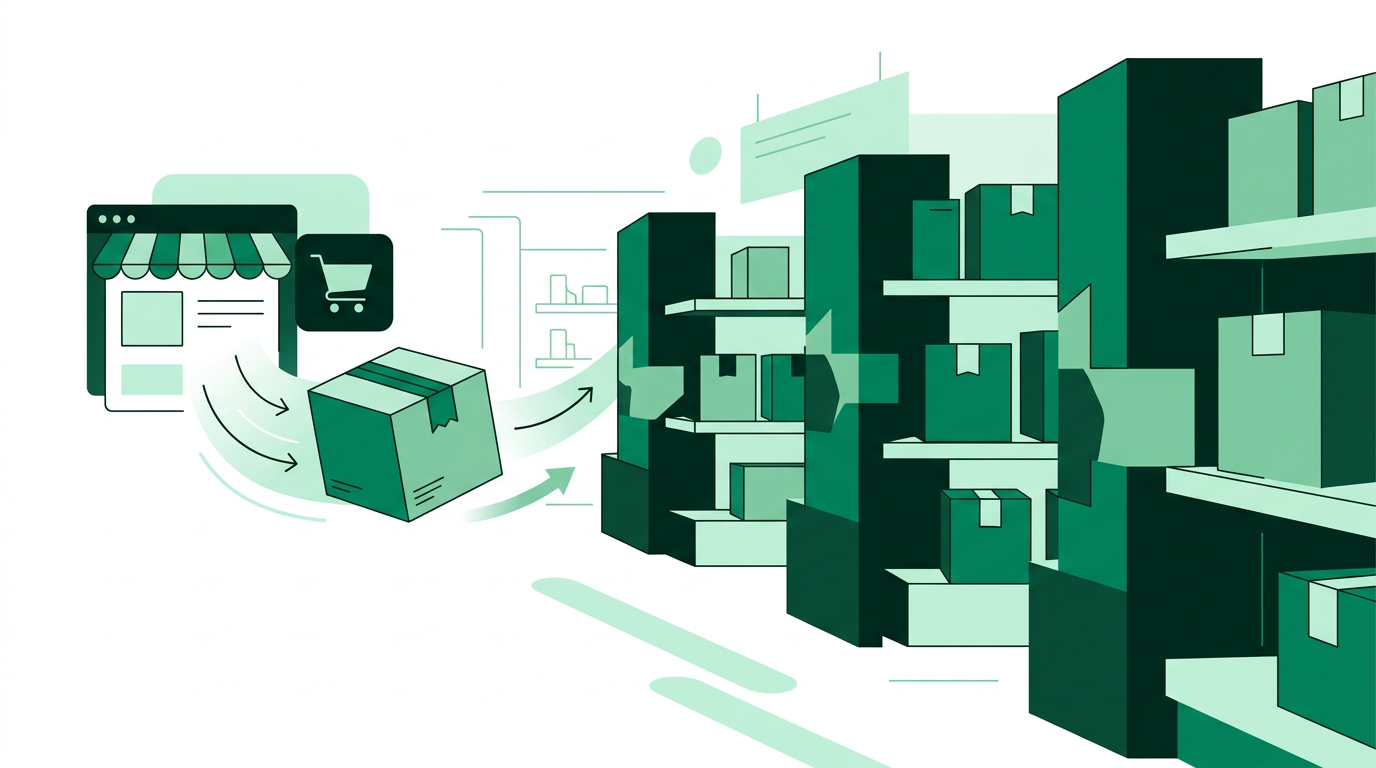
To get your product into retail stores, prove it sells before you pitch. Gather sales, repeat-purchase, and review data, then price it so a retailer can roughly double your wholesale cost and keep about a 50 percent margin. Build a one-page sell sheet and an orderable line sheet, target 20 to 50 stores that already serve your customer, and pitch buyers in person for local shops or by personalized email and trade shows for larger accounts. Lead with evidence, not adjectives. Once a store says yes, make reordering effortless with wholesale pricing, minimums, and net terms so you can scale from one stockist to many.
Key takeaways
- Buyers bet on proof, not ideas: bring sales, repeat-rate, and review data before you pitch.
- Prepare two documents, a one-page sell sheet and an orderable line sheet with wholesale prices and MOQs.
- Price wholesale at about 50 percent of retail so the store keeps a healthy margin and you still profit.
- Match the pitch to the store: walk in for local independents, personalized email and trade shows for regional and national buyers.
- After a yes, make reorders self-serve with tiered pricing, minimums, and net terms so you can scale stockists without spreadsheets.
In this article
- Are you actually ready to sell to stores?
- What documents do buyers expect?
- How do you find the right stores to pitch?
- How do you pitch a retail buyer?
- How should you price for wholesale?
- What happens after a store says yes?
- Frequently asked questions
Are you actually ready to sell to stores?
Before you email a single buyer, a retailer needs three things from you: proof the product sells, a wholesale price that leaves them margin, and the ability to fulfill a reorder without chaos. Buyers are not betting on your idea. They are betting on evidence.
Come with real numbers. Units sold, repeat-purchase rate, reviews, waitlist size, or sell-through in a comparable store all answer the one question every buyer asks: will this move on my shelf? A product with 500 online sales and a 30 percent repeat rate is a far easier yes than a beautiful product with no track record.
You also need standard retail margins built into your costs. Most retail buyers expect to roughly double the wholesale price to set the shelf price, so your wholesale cost has to leave them near a 50 percent margin while still leaving you a profit. If the math does not work at wholesale volumes, fix that before you pitch, not after.
What documents do buyers expect?
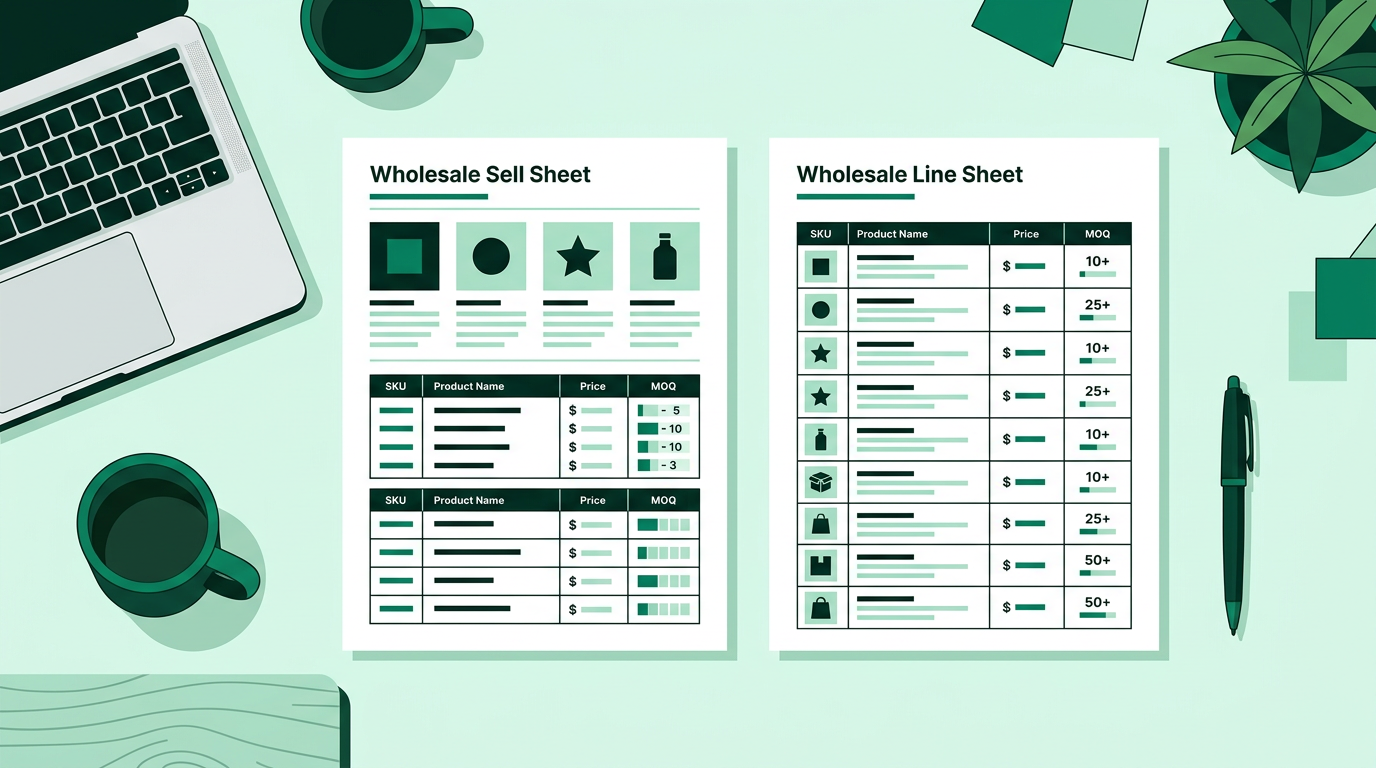
Two documents do most of the work: a sell sheet and a line sheet. A sell sheet is a single page that pitches one product or your hero range. A line sheet is the ordering document that lists your full catalog with wholesale prices, so a buyer can actually place an order.
Your sell sheet should carry the product name and a short description, the benefits and what makes it different, clean photos of the product and packaging, the wholesale price and suggested retail price, your minimum order quantity and lead time, and clear contact and ordering details. Keep it to one page. Buyers skim.
The line sheet is where deals get placed, so it has to be accurate and easy to order from. If you have not built one yet, follow our step-by-step guide on how to make a wholesale line sheet, and make sure your wholesale prices are calculated to protect both margins.
How do you find the right stores to pitch?
Start with stores that already sell products like yours to the customer you want, then work outward. The goal is fit, not volume. A boutique whose shoppers already buy your category will say yes faster than a national chain that has never heard of you.
Build a target list of 20 to 50 stores. For each, note the buyer or owner's name, what they currently stock, and the gap your product fills. Local independent stores are the easiest place to start because the relationship is personal and the owner often is the buyer. Land a few of those, gather sell-through data, then use that proof to approach larger regional retailers and chains.
How do you pitch a retail buyer?
The best channel depends on the store. In-person wins for local independents, a tight personalized email works for busy regional buyers, and trade shows or curated buyer marketplaces put you in front of many buyers at once. Personalized pitches consistently outperform generic blasts, so name the buyer, name the store, and show the specific gap you fill.
Here is how the three main approaches compare on the criteria that actually decide which one to use.
Walking in works best for local independents: you introduce yourself to the owner, hand over a sample, and ask what their customers keep requesting. It is personal and hard to ignore, but it does not scale past your own zip codes. Cold email scales much further and costs almost nothing, but it only converts when it is genuinely personalized and backed by sell-through data, so it suits regional buyers once you have proof. Trade shows and curated buyer marketplaces put you in front of many buyers who are there specifically to place orders, which is powerful, though booth fees and travel make them an investment you make after your pitch and pricing are proven.
Whichever channel you use, lead with evidence and end with a clear, low-friction next step: a sample, a line sheet, and an easy way to place a first order.
How should you price for wholesale?
Wholesale price is typically about half your suggested retail price, which is the same as a keystone markup for the store. That gives the retailer room to roughly double your price and still land at a shelf price shoppers accept. Your job is to make sure that wholesale number still covers your costs and leaves a profit at volume.
Set clear terms alongside the price so there are no surprises: a minimum order quantity, case or pack sizing, lead time, and payment terms. Many established retailers expect net terms rather than paying on the spot, so decide early whether you can offer net 30 terms and set sensible minimum order quantities that keep each order worth fulfilling.
What happens after a store says yes?
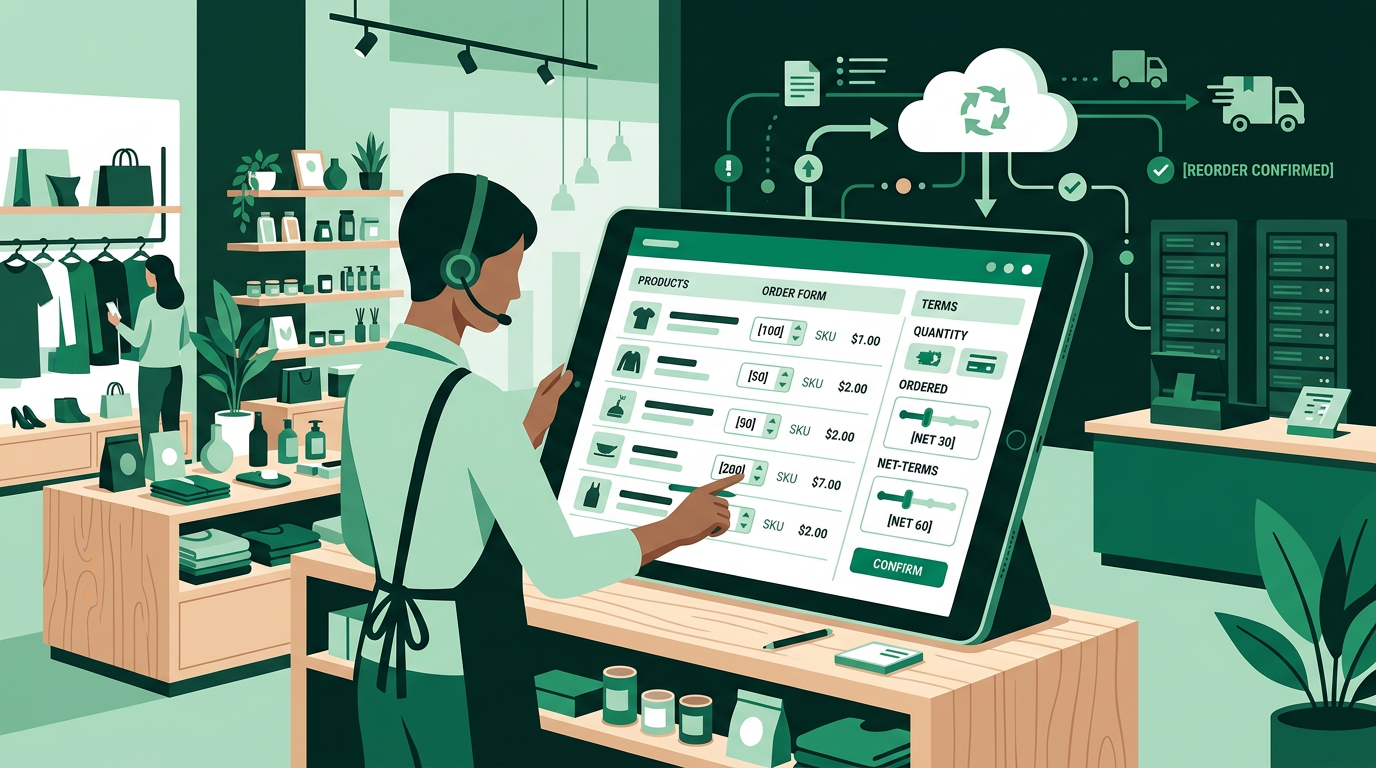
A yes is the start of the real work. Now you have to take reorders, apply the right wholesale price for each account, enforce minimums, and often invoice on net terms, all without a manual spreadsheet for every buyer. This is exactly where brands lose time and make errors as they add stockists.
The cleaner path is to let retail buyers self-serve on the same Shopify store you already run. With PortalSphere set up for wholesale, approved buyers log in to see their tiered pricing, order at or above your MOQs and pack sizes, and check out on net terms, while your retail shoppers see normal prices. No second platform, no re-keying orders, and no chasing spreadsheets as your list of stores grows.
Frequently asked questions
How do I get my product into stores with no sales history?
Start hyper-local. Approach a handful of independent stores in person, offer a small trial order or consignment, and use the sell-through from those shops as the proof you show larger buyers. A few stores with strong reorders beat a cold pitch with no data.
What is the difference between a sell sheet and a line sheet?
A sell sheet is a one-page pitch for a product or hero range, focused on why it sells. A line sheet is the ordering document listing your full catalog with wholesale prices, MOQs, and terms, so a buyer can place an order directly from it.
What wholesale price should I set?
A common rule is to set wholesale at about 50 percent of your suggested retail price, so the retailer can roughly double it and keep a healthy margin. Confirm that number still covers your product costs and leaves you a profit at wholesale volumes before you commit to it.
Do I need a separate website to sell wholesale?
No. You can run wholesale and retail from the same Shopify store using gated pricing and buyer accounts, so approved retailers see wholesale prices and terms while regular shoppers see standard pricing. See our guide on selling B2B and B2C from one store.
How many stores should I pitch at once?
Build a focused list of 20 to 50 well-matched stores rather than blasting hundreds. Personalized pitches to a tight, relevant list convert far better than generic outreach, and a smaller list is easier to follow up with properly.
Ready to sell wholesale the moment a store says yes?
PortalSphere turns your Shopify store into a full wholesale channel with tiered pricing, MOQs, and net terms, plus free onboarding to set it all up before you go live.