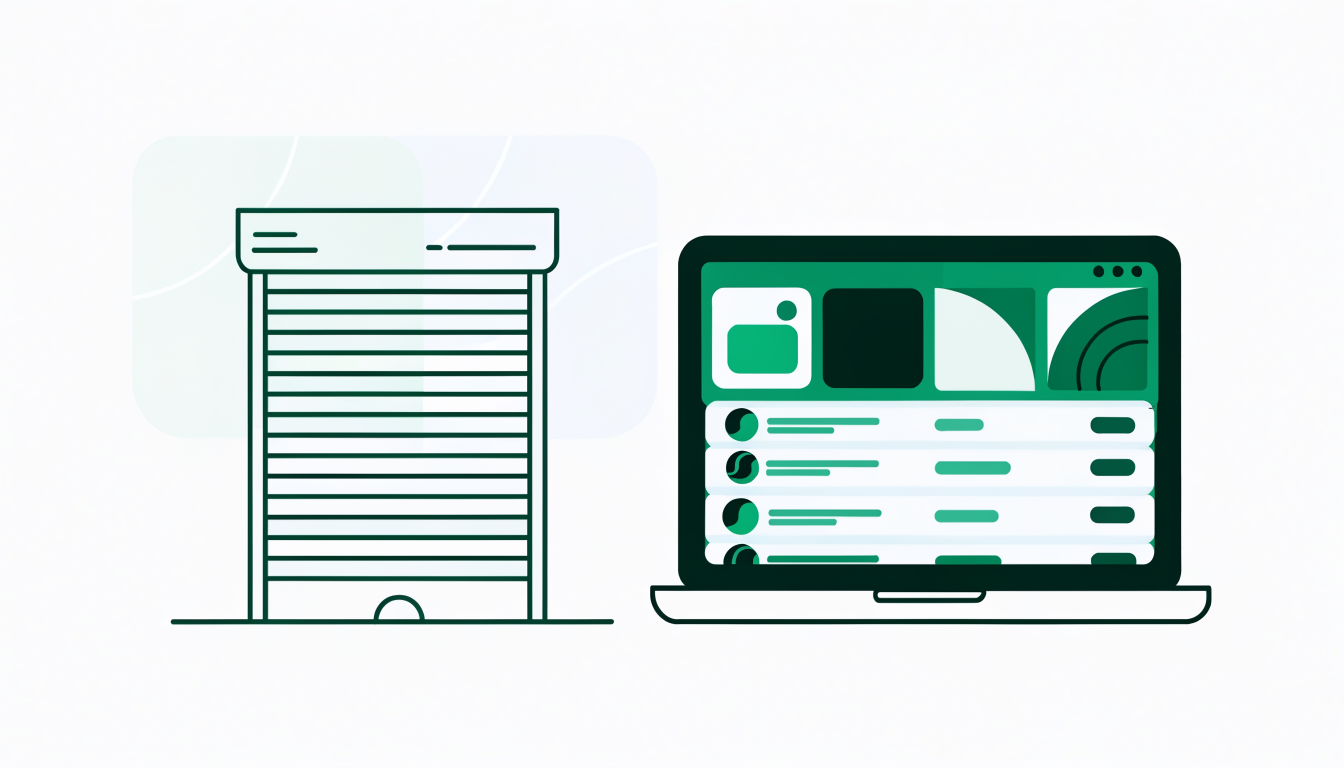
B2B Ecommerce Strategy: A 2026 Playbook for Maximizing Sales


A B2B ecommerce strategy is the plan for how your business takes wholesale orders online: which accounts get self-service, what each buyer sees and pays, how orders reach your ERP and accounting, and which KPIs prove it worked. Build it in seven steps. Move your existing reorder accounts online first, choose a platform model you will not outgrow, design the pricing architecture (list, tiers, volume breaks, contract prices) before the storefront, gate the catalog so retail and wholesale prices never meet, make repeat ordering fast with MOQs, pack sizes and net terms, connect the back office so nobody retypes an order, and agree three to five KPIs with a pre-launch baseline. On Shopify, most brands under roughly $20M in wholesale revenue get there fastest by extending the store they already run rather than migrating to a separate B2B platform.
Key takeaways
- A B2B ecommerce strategy is four decisions, not a website project: pricing architecture, catalog access, order rules and back-office sync.
- Launch to your existing reorder accounts first. Ten repeat buyers using the portal beats 200 invited prospects who never log in.
- Since April 2026 Shopify's native B2B features run on Basic, Grow and Advanced, capped at three catalogs, so differentiation now comes from pricing depth and gating rather than from simply having a portal.
- Price backwards from MSRP, and pair every volume break with a minimum order quantity so a tier is not just a discount.
- Measure self-serve order share, reorder frequency, activation rate, AOV by tier and cost to serve against a pre-launch baseline.
In this article
- What is a B2B ecommerce strategy?
- Why do most B2B ecommerce strategies stall?
- The seven steps of a B2B ecommerce strategy
- Which platform model should you build on?
- How do you price for B2B without undercutting retail?
- What does a B2B ecommerce marketing strategy look like?
- How do you measure a B2B ecommerce strategy?
- What changed in B2B ecommerce in 2026?
- Frequently asked questions
What is a B2B ecommerce strategy?
A B2B ecommerce strategy is the written plan for how your business takes wholesale orders online: which buyers get self-service, what each one sees and pays, how those orders reach your back office, and which numbers prove it is working. It is not the same thing as a website project. The site is one deliverable inside it.
The distinction matters because most B2B online sales strategy documents you will read are really marketing plans wearing a commerce badge. They talk about content, personalization and omnichannel, and skip the four decisions that actually determine whether a wholesale buyer places an order without emailing your rep: pricing architecture, catalog access, order rules, and back-office sync. Get those wrong and no amount of traffic saves you.
A good B2B digital commerce strategy answers five questions in order:
- Who buys online first? Usually your existing reorder accounts, not new logos.
- What do they see? Gated catalogs, contract pricing, their own SKUs.
- What are the rules? Minimum order quantities, pack sizes, payment terms, tax exemption.
- Where does the order go? ERP, accounting, 3PL, and the rep who owns the account.
- How do you know it worked? Share of orders placed self-serve, reorder rate, cost to serve.
Why do most B2B ecommerce strategies stall?
Wholesale channels rarely fail because the technology is missing. They fail for four repeatable reasons.
1. The channel is launched to the wrong buyers
Teams open the portal to prospects before their existing accounts are on it. New buyers need a catalog, credit approval and a sales conversation. Existing accounts already have all three and just want to reorder. Start with the accounts that place the same order every six weeks and you get usage in month one instead of month nine.
2. Retail pricing leaks
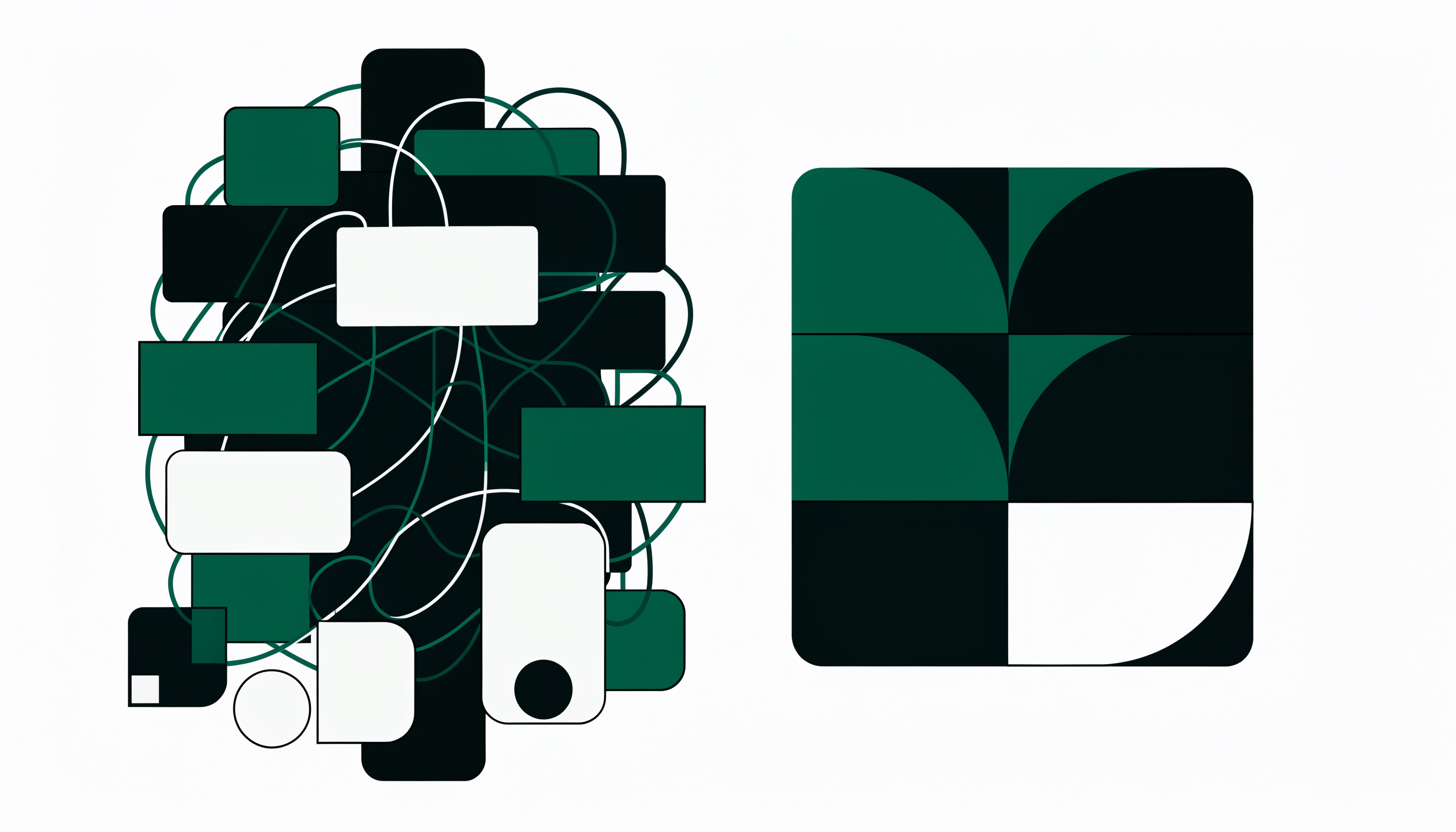
If a wholesale buyer can see consumer prices, or a consumer can see wholesale prices, both channels suffer. Gating is a strategy decision, not a plugin you add later. See our guide to hiding prices on Shopify until customers log in for the mechanics.
3. Order rules live in a spreadsheet
Minimum order quantities, case packs and per-account discounts get enforced by a human reading an email. That human is the bottleneck, and the errors they make are the reason buyers go back to phoning.
4. Nobody owns the number
The channel launches, orders trickle in, and no one has agreed what success looks like by when. Six months later the project is quietly parked.
The seven steps of a B2B ecommerce strategy
This is the sequence we see work for Shopify brands adding or scaling a wholesale channel. Do them in order. Steps 3 and 4 are where most of the revenue is won, and they are the two most often skipped.
Step 1: Decide which orders move online first
Segment your accounts by order frequency, not by size. Rank them and pick the top decile of repeat buyers as your pilot. Give that group a deadline, a login and a reason to use it, such as faster confirmation or a small self-serve discount. Ten accounts reordering online beats two hundred accounts with a password they never used.
Step 2: Choose a platform model you will not outgrow in a year
There are three realistic shapes: Shopify's native B2B tools, a Shopify store extended by a wholesale app, or a separate B2B platform running alongside your DTC store. The comparison in the next section covers the trade-offs. If you are still narrowing the field, our complete B2B ecommerce platform buyer's guide works through the criteria in detail.
Step 3: Build the pricing architecture before the site
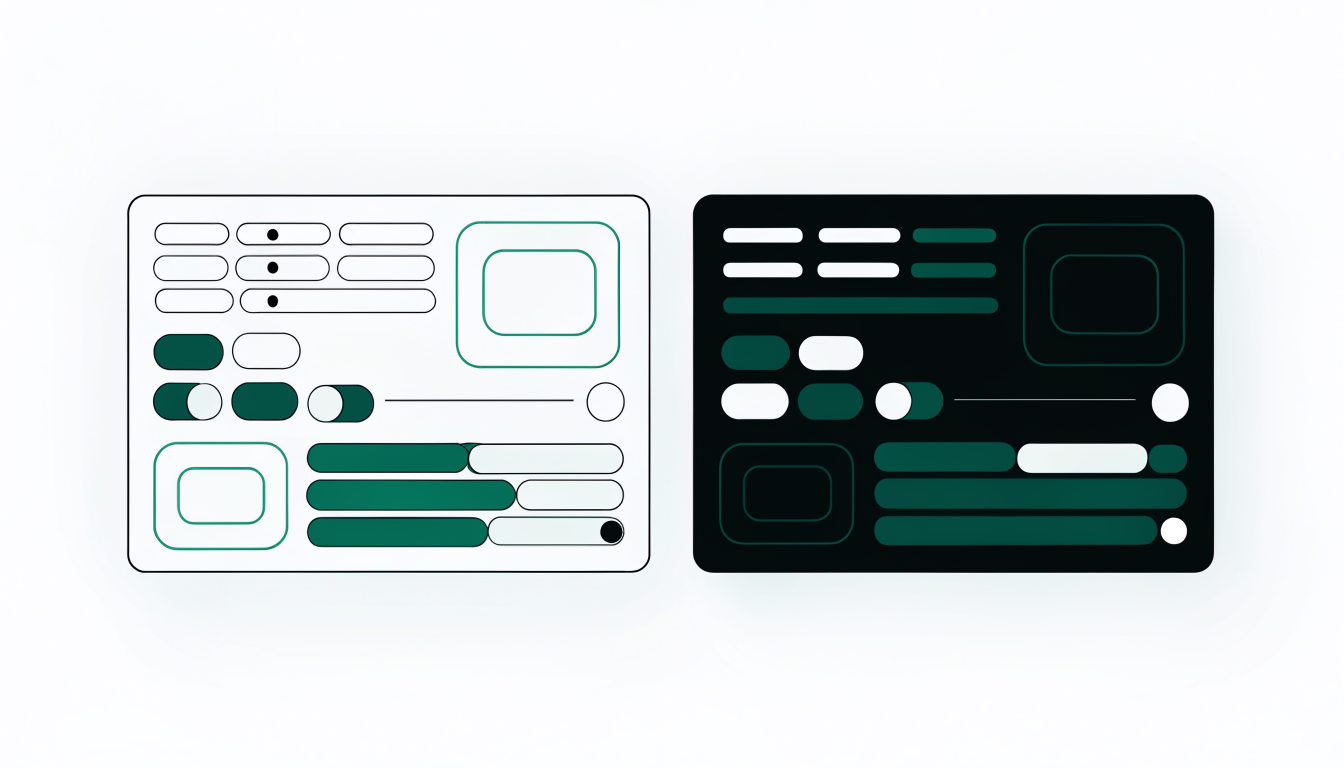
Write down every price a buyer could legitimately see: list, tier one, tier two, contract, promotional, and any per-account exception. Then decide which of those the system will hold and which stay manual. Most brands need customer-group tiers plus volume breaks, and a small number of negotiated per-account prices on top. Our walkthrough of Shopify B2B pricing methods covers the five ways to do this and where each one breaks.
Step 4: Gate the catalog and control access
Decide who can see the wholesale storefront at all. In practice this means a registration form with approval, hidden prices for logged-out visitors, and product visibility rules so a retail customer never lands on a case-pack SKU. Per-buyer assortments come next: see building per-buyer B2B catalogs.
Step 5: Make the order itself fast
Wholesale buyers do not browse. They arrive with a list. The order experience should support quick entry by SKU, one-click reorder from history, saved carts, minimum order quantities and pack sizing enforced in the cart rather than in an email, plus net 30 terms at checkout and automatic tax exemption for resale accounts.
Step 6: Connect the back office
An online order that a human retypes into your ERP has moved the work, not removed it. Map the four flows before launch: products and inventory out, orders in, customers and pricing both ways, and invoices back to accounting. Our guide to the eight systems to connect first sets the sequence.
Step 7: Agree the measurement layer on day one
Pick three numbers, publish them, and review them monthly. Most teams should track self-serve order share, reorder frequency and average order value by tier. The full set is in 11 B2B ecommerce KPIs worth tracking.

Which platform model should you build on?
For most Shopify brands under roughly $20M in wholesale revenue, extending the existing Shopify store with a wholesale app wins on speed and total cost, because one catalog, one inventory pool and one admin beat a second platform to reconcile. A separate B2B platform only pays for itself when your product data, contracts or ERP requirements genuinely cannot live in Shopify.
One thing changed in April 2026 that reshapes this decision. Shopify moved its native B2B features, including company profiles, volume discounts, quantity rules, vaulted cards and payment terms, onto Basic, Grow and Advanced plans, having previously reserved them for Plus. Non-Plus merchants get up to three custom catalogs. Unlimited catalogs, direct catalog assignment to companies and locations, and partial payments remain Plus-only, per Shopify's own announcement.
PortalSphere on Shopify
PortalSphere handles tiered pricing, volume discounts, MOQs and pack sizing, gated registration with hidden prices, net terms and tax exemption natively on the store you already run, so a brand on Basic or Grow gets unlimited price lists rather than the three-catalog ceiling, without moving platforms or maintaining a second inventory pool. It also adds wholesale-specific AI upsells, which neither of the other two options ships by default.
Shopify native B2B
Since April 2026 this is a genuinely viable starting point on any plan, and for a brand with a handful of accounts and simple pricing it may be all you need. The ceiling arrives at three catalogs, at gating (product visibility and approval workflows still need work), and at Plus-only features such as direct catalog assignment. Our side-by-side on Shopify B2B versus a wholesale app covers where that line falls.
A separate B2B platform
Worth it when your catalog logic, contract pricing or ERP integration genuinely exceeds what Shopify can model, or when B2B is the majority of revenue and DTC is the side channel. The cost is a second system: separate inventory, separate content, separate reporting, and a migration measured in months rather than days.
How do you price for B2B without undercutting retail?
This is the question that stalls the most wholesale ecommerce strategy documents, and the answer is architectural rather than arithmetic.
Start from your retail price and work backwards. A common structure is a base wholesale price at roughly 50% of MSRP, then volume breaks of 5% to 15% layered on top for buyers who hit case or pallet thresholds, then a small number of negotiated contract prices for your largest accounts. Keystone pricing is the traditional shorthand for the first step, and it still holds for most physical goods.
Three rules keep the channels from colliding:
- Never show both prices to the same session. Gate wholesale behind login, and hide prices entirely from logged-out visitors on wholesale SKUs.
- Protect the buyer's own margin. If your DTC promotions routinely undercut what a stockist paid, they will stop stocking you. A minimum advertised price policy is the usual instrument.
- Enforce minimums so discounts stay honest. A tier-three price without a matching minimum order quantity is just a discount. Set MOQs on Shopify wholesale at the point where the tier actually pays.

What does a B2B ecommerce marketing strategy look like?
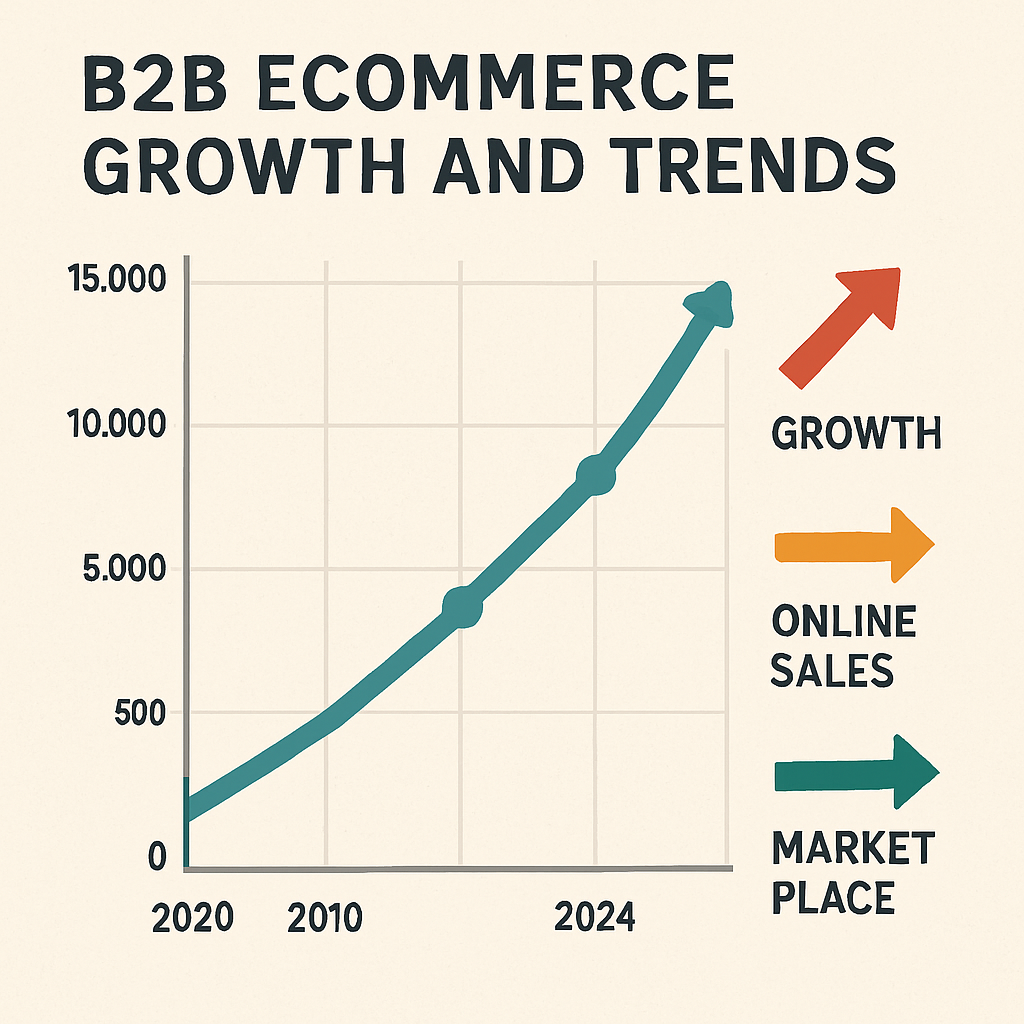
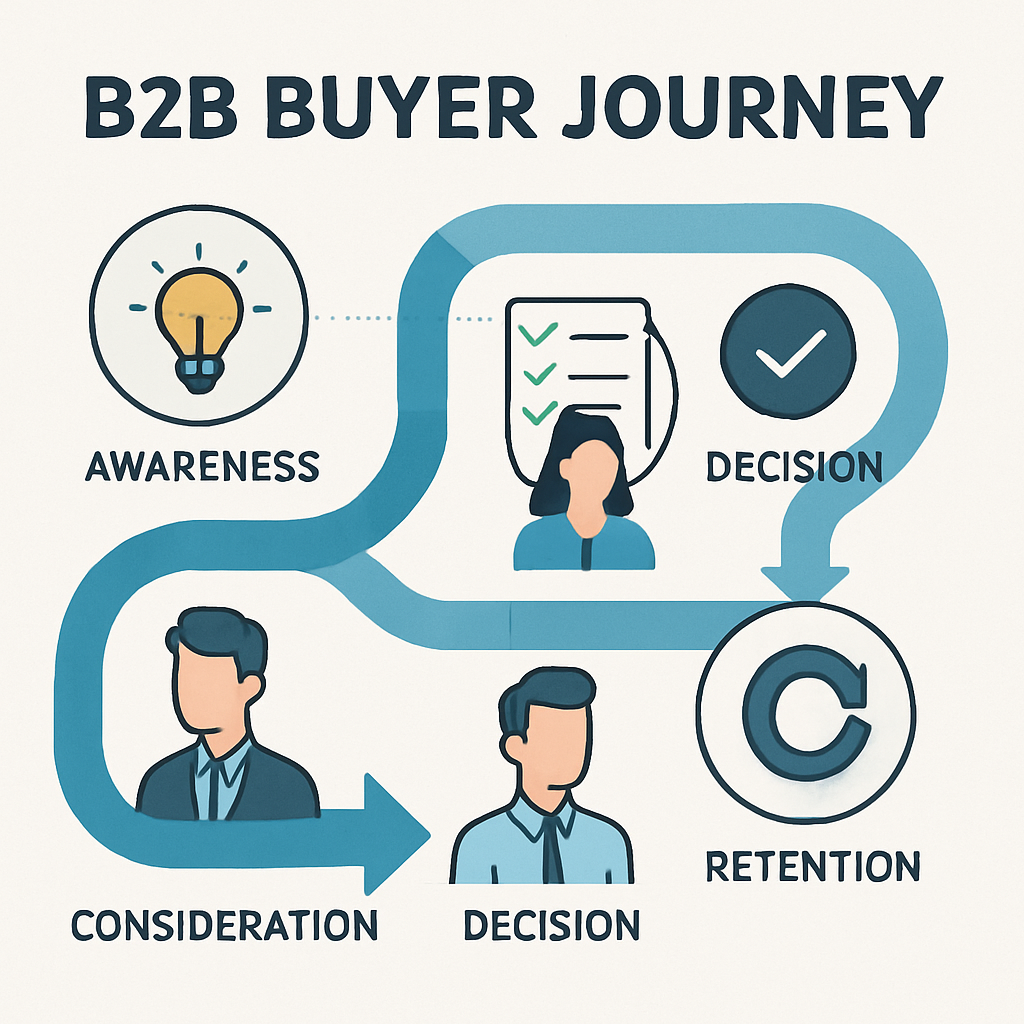
Demand generation for wholesale looks nothing like DTC, because the buyer is a business with a budget cycle and a committee. McKinsey's B2B Pulse research found that buyers now use around ten channels across a purchase journey, double the five they used in 2016, and that ecommerce is rated the single most effective sales channel by 35% of respondents, ahead of in-person selling at 26%. You can read the full McKinsey analysis here.
That shapes four priorities.
Own the searches your buyers actually run
Wholesale buyers search for problems and specifications, not for your brand. Terms like "case pack minimum", "net 30 supplier" and "[category] wholesale supplier" convert far better than category head terms. Build a page for each, and make sure it states your MOQ, lead time and terms in plain text, because that is what both buyers and AI answer engines extract.
Treat your line sheet and catalog as marketing assets
A current, downloadable line sheet with real photography, pack sizes and case costs removes the most common reason a prospect stalls. Update it quarterly.
Use email for reorder timing, not newsletters
The highest-return B2B email is a reorder prompt sent at the buyer's actual replenishment interval, calculated from order history. Segment by tier and by days since last order rather than by open rate.
Enable the sales team rather than replacing it
Self-service does not remove reps, it changes what they do. Give each rep a view of their accounts' online activity, let them place orders on a buyer's behalf, and pay commission on self-serve orders from their accounts. Skip that last part and your reps will quietly steer buyers away from the portal.
How do you measure a B2B ecommerce strategy?
Vanity traffic numbers are useless here, because a wholesale channel with 400 visitors a month can be extremely healthy. Measure the channel on the behaviour of accounts, not sessions.
The five that matter most in the first year:
- Self-serve order share. The percentage of wholesale orders placed without a human touching them. This is the headline number for maximizing B2B ecommerce sales efficiency, and 40% within twelve months is a reasonable target for a brand starting from zero.
- Reorder frequency by account. Days between orders, tracked per account. Shopify reports up to a 20% lift in reorder frequency for merchants adopting B2B features.
- Activation rate. The share of invited accounts that have placed at least one online order. Below 30% after 90 days means your onboarding, not your product, is the problem.
- Average order value by tier. If tier three is not outperforming tier one on AOV, your volume breaks are mispriced.
- Cost to serve. Rep hours plus order-entry time per order. This is where the channel pays for itself, and it is the number CFOs care about.
Review monthly against a baseline you captured before launch. Without the baseline you cannot prove the channel did anything.
What changed in B2B ecommerce in 2026?
Three shifts are worth writing into your plan this year.
Native B2B reached every Shopify plan
As of April 2026, company profiles, volume discounts, quantity rules and payment terms are available on Basic, Grow and Advanced. The practical effect is that the entry cost of a wholesale channel dropped to near zero, so your differentiation has to come from pricing sophistication, catalog control and buyer experience rather than from simply having a portal.
AI moved from recommendations to operations
The useful applications in wholesale are not chatbots. They are reorder prediction, per-account upsell suggestions based on assortment gaps, and automated catalog mapping during onboarding. We covered the working examples in AI in B2B ecommerce.
Answer engines became a discovery channel
Buyers increasingly ask an AI assistant to shortlist suppliers before they open a search engine. Those systems extract specifics: minimum order quantity, lead time, payment terms, territories served. Pages that state those in plain sentences get quoted. Pages that hide them behind a contact form do not.
What is the fastest way to start?
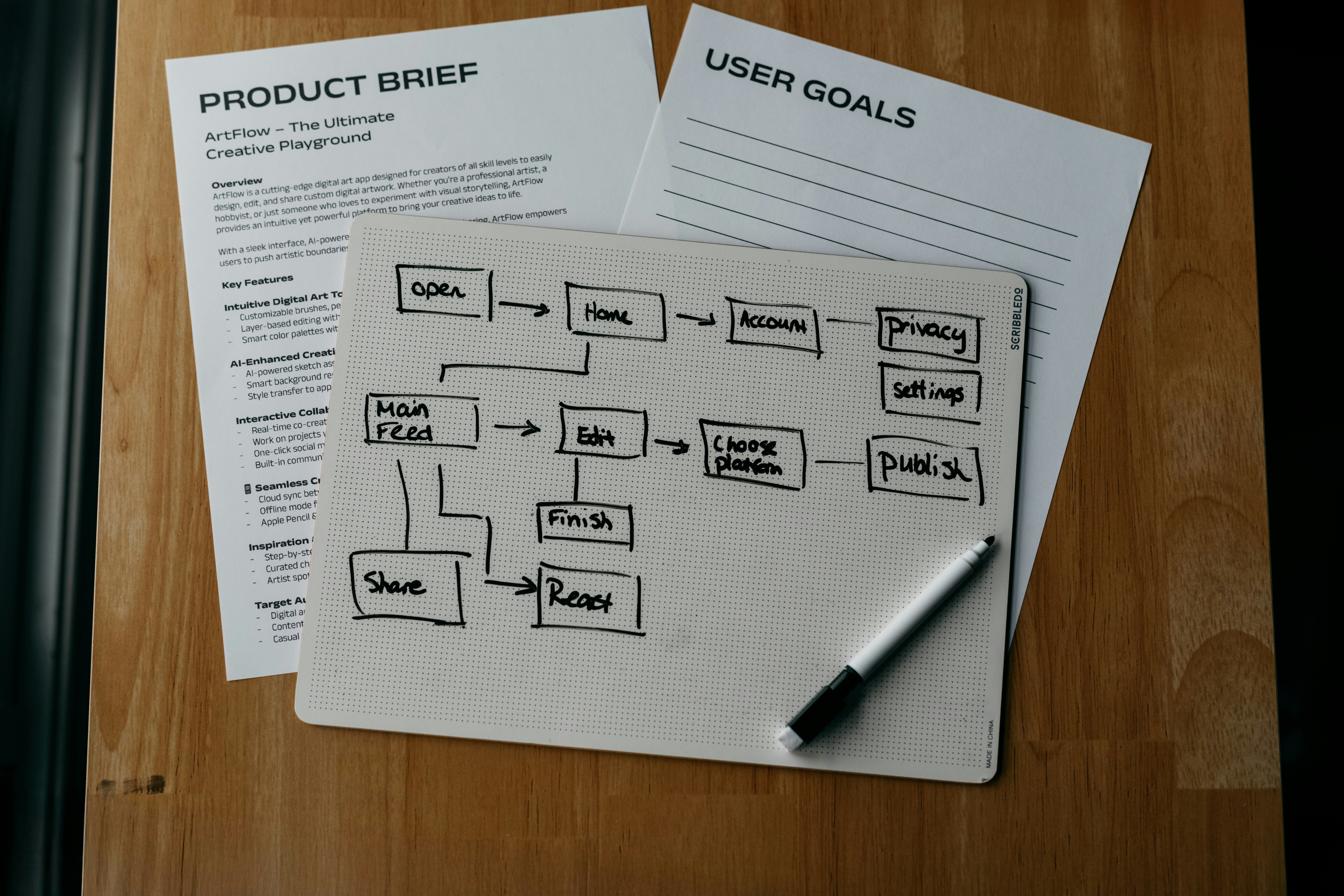
If you already sell on Shopify, the shortest credible path is: pick ten reorder accounts, set two pricing tiers, gate the catalog, turn on MOQs, and invite those ten accounts with a deadline. That is a two week project, not a two quarter one, and it produces the data you need to justify everything after it. Our step by step walkthrough of how to set up wholesale on Shopify covers the build itself.
Frequently asked questions
What should a B2B ecommerce strategy include?
At minimum: the buyer segments moving online first, the pricing architecture (list, tiers, volume breaks, contract prices), catalog access and gating rules, order rules such as MOQs and pack sizes, payment terms and tax exemption handling, back-office integrations, and three to five KPIs with a pre-launch baseline. A marketing plan sits on top of that, not in place of it.
How long does it take to launch a B2B ecommerce channel?
On an existing Shopify store, a focused pilot with tiered pricing, gating and MOQs can be live in one to two weeks. A migration to a separate B2B platform typically runs three to nine months. The variable is rarely the software; it is how long it takes to agree the pricing rules internally.
Do I need Shopify Plus for B2B in 2026?
No. Since April 2026 Shopify's native B2B features, including company profiles, volume discounts, quantity rules and payment terms, are available on Basic, Grow and Advanced plans, with a limit of three custom catalogs. Plus adds unlimited catalogs, direct catalog assignment to companies and locations, and partial payments. A wholesale app can lift the catalog ceiling without the Plus upgrade.
Can I run B2B and B2C on the same Shopify store?
Yes, and for most brands it is the better setup, because you keep one inventory pool, one product catalog and one admin. The requirement is strict separation of what each audience sees: gated wholesale pricing, hidden prices for logged-out visitors, and product visibility rules so consumers never reach case-pack SKUs.
What is a realistic first-year target for online wholesale orders?
For a brand starting from manual ordering, 40% of wholesale orders placed self-serve within twelve months is achievable, provided you begin with existing reorder accounts rather than new prospects. Activation of invited accounts is the leading indicator: if fewer than 30% have ordered online after 90 days, fix onboarding before adding features.
How is a B2B ecommerce strategy different from a B2C one?
The buyer is a committee with a budget cycle, prices differ per account, order minimums apply, payment is often on terms rather than by card, and the same customer reorders on a predictable interval. That changes the entire design: your job is to make a known buyer's repeat purchase frictionless, not to convert an anonymous first-time visitor.
Put your B2B ecommerce strategy live on Shopify
PortalSphere adds tiered pricing, gated access, MOQs, net terms and AI wholesale upsells to the store you already run. Fourteen day free trial, plus free onboarding on a draft store before you go live.